Preview image. Unlock full-res
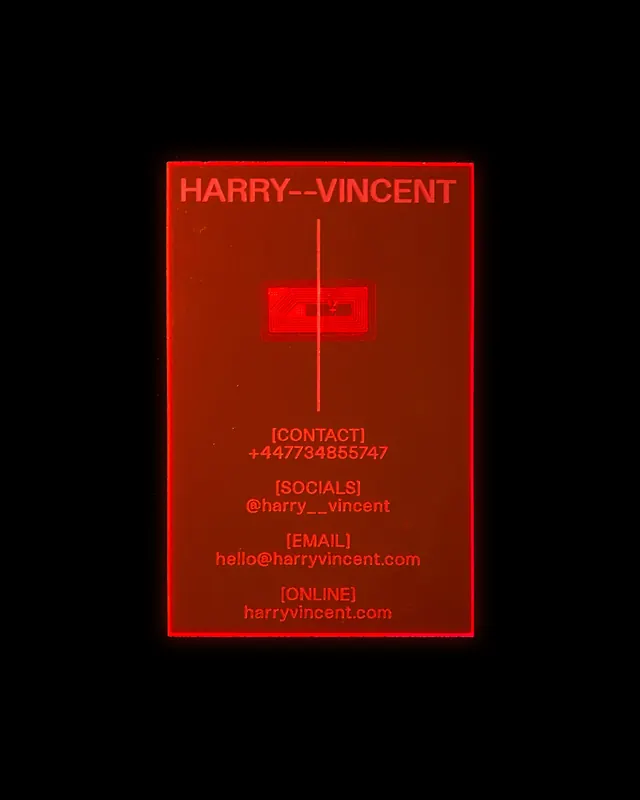
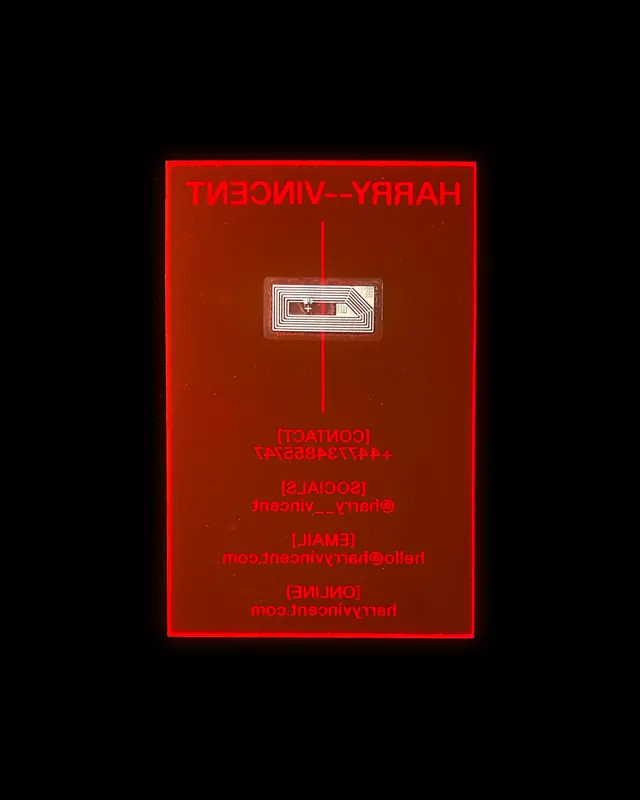
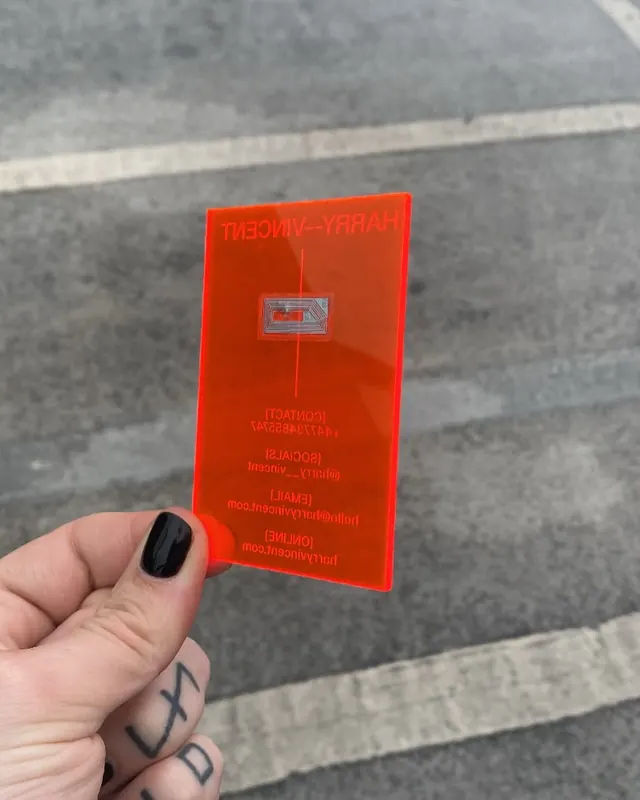
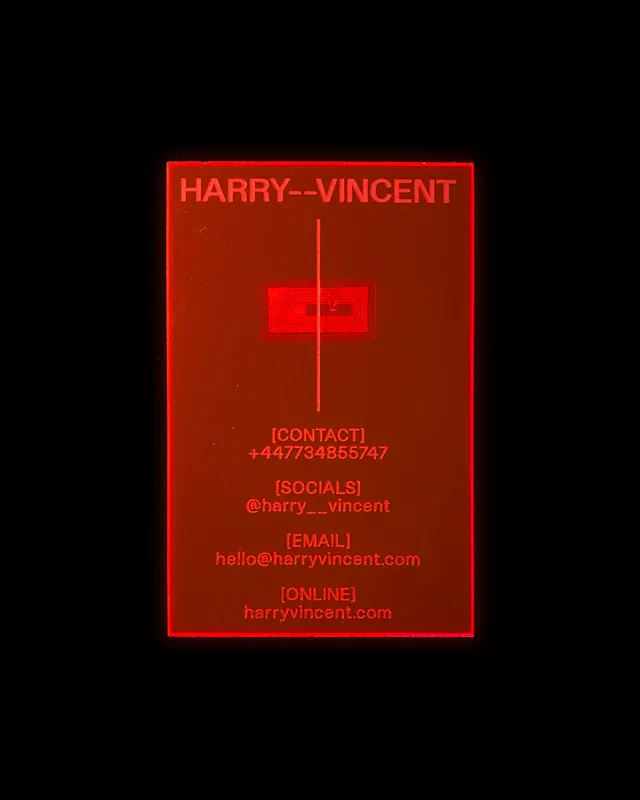
Laser-cut translucent red acrylic contact card with embedded NFC chip and multi-format physical packaging, shown in product photography and documentation carousel.

Summary
A luxury business card design system combining laser-cut translucent red acrylic with an embedded NFC chip, neon-lit presentation, and comprehensive product documentation. The card bridges analog craft with digital connectivity, transforming a contact card into an interactive gateway.
Visual description
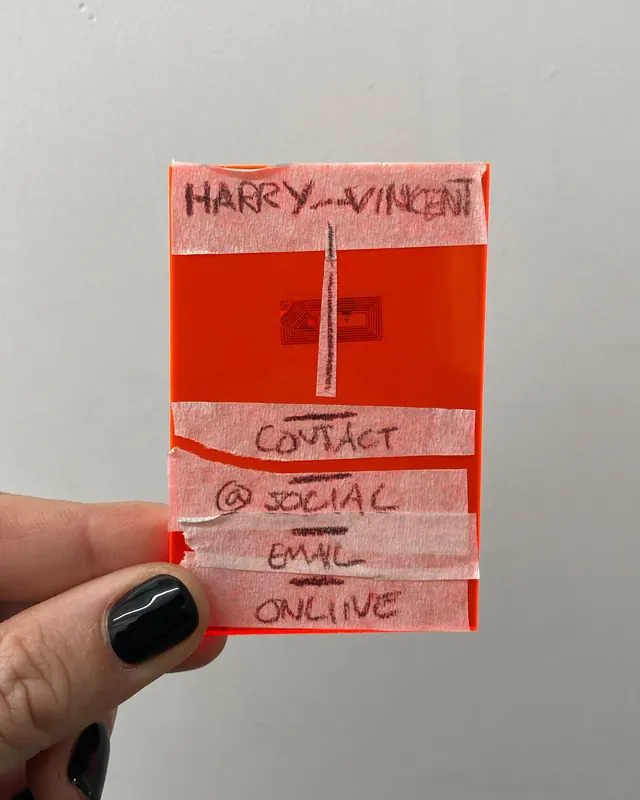
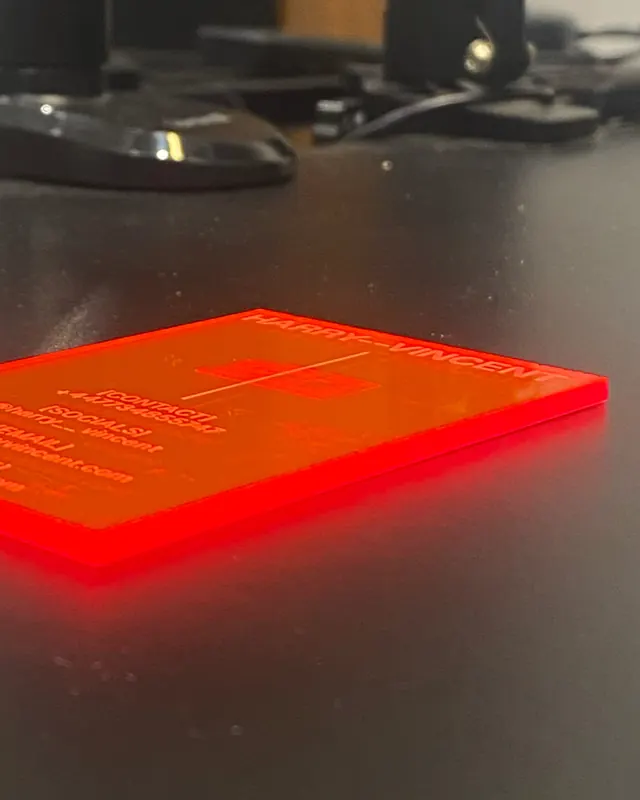
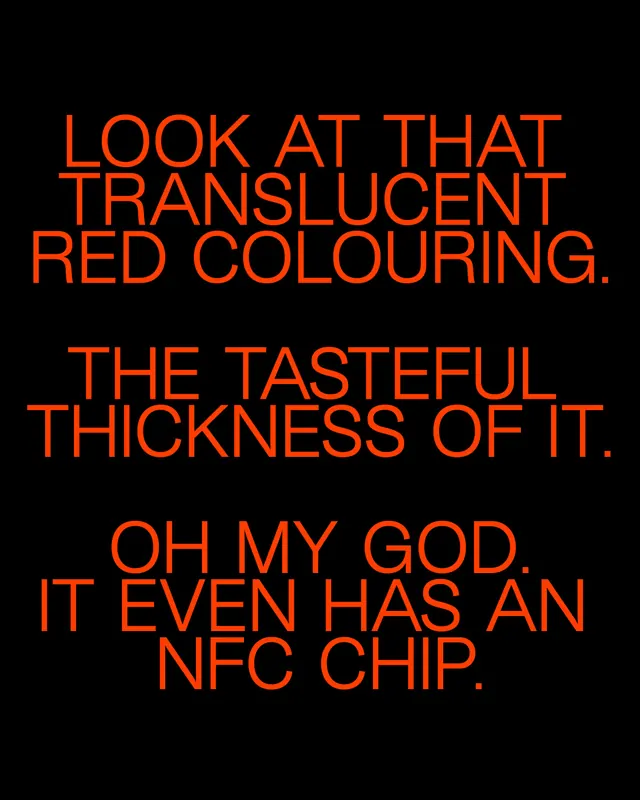
Slide 1-2: Neon product photography of the translucent red acrylic card with "HARRY--VINCENT" and contact details glowing against black background. The card is a thin rectangular slab with routed/etched text and a small central rectangular cavity for the NFC chip (visible as a white embedded element). Slide 3: Layout/specification document. Slides 4, 6, 7: Motion photography (video frames) of the card being rotated and handled, emphasizing the translucent red finish and the neon effect under controlled lighting. Slide 5: Flat lay of the NFC chip and card assembly. Slides 8-11: Environmental and contextual photographs showing the card in a designer workspace, worn by the designer, and alongside related design artifacts. Text throughout is all-caps, sans-serif, in a geometric style. Color palette is strictly red, black, and white with documentary photography in naturalistic tones.
Key takeaway
Embedding digital interactivity (NFC) into a physical luxury craft object creates a seamless handoff from physical impression to digital engagement. The neon presentation elevates a mundane business card into a memorable keepsake. The thoughtful integration of the chip (nested in a routed cavity) maintains visual and tactile minimalism.
Reuse notes
Strong reference for luxury product design, business cards that bridge analog and digital, and portfolio documentation of physical products. The neon photography technique is distinctive and requires controlled lighting; the card itself works better in bright, neutral light. The design is primarily successful because of the material choice (translucent red acrylic) and tight integration of the technology-either element in isolation would be less impactful. Suitable for high-end, design-forward brands or personal portfolios.