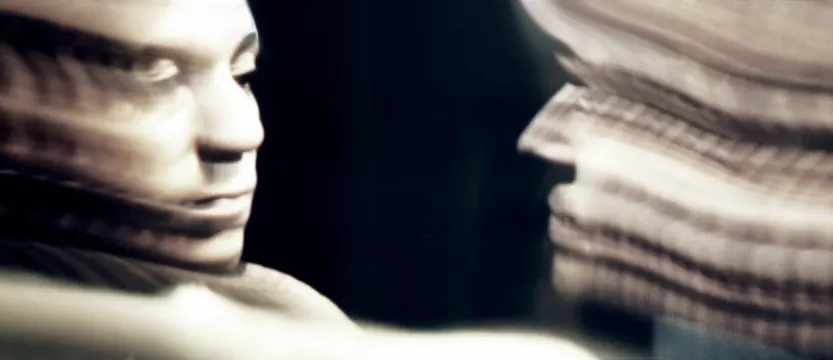
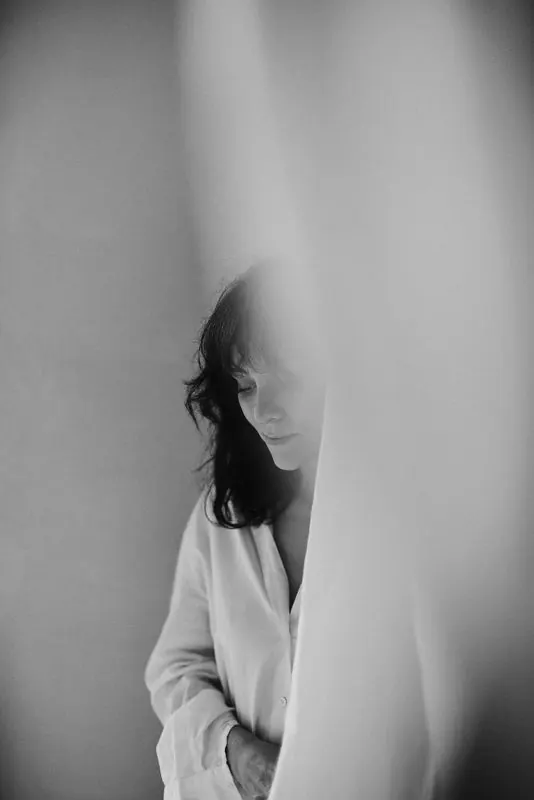
Deliberately soft-focus black and white portrait of a subject in patterned garment, emphasizing mood over detail through diffusion technique.

Summary
A soft-focus black and white portrait where deliberate diffusion blurs detail, creating a dreamy, intimate aesthetic while retaining facial structure and patterned fabric texture.
Visual description
A three-quarter profile portrait photographed in black and white with pronounced soft focus or diffusion filter applied. The subject's head tilts slightly downward and to the side, their face softly out of focus while still readable in terms of feature placement and expression. Their gaze is downcast. The subject wears a patterned garment (possibly patterned fabric or textured knit) visible at the shoulders and neckline; the pattern remains slightly discernible despite the diffusion. The background is entirely soft and tonally neutral, providing gentle separation without being distinct. Lighting is even and flattering, with soft shadows that enhance form without harshness. The overall tonality is bright and airy, dominated by light grays and off-whites with deeper tones in the hair and fabric. The soft-focus effect is consistent across the frame, suggesting a lens filter or intentional defocus rather than selective focus.
Key takeaway
Soft focus as an editorial tool: by intentionally blurring, the photographer transforms a portrait from documentary to mood piece. The technique signals romanticism, nostalgia, or emotional introspection—what you lose in clarity, you gain in atmosphere.
Reuse notes
Powerful for fashion, lifestyle, wellness, and editorial work. The soft focus is particularly effective when emotion matters more than facial detail recognition. Works well for brand photography in luxury, beauty, or lifestyle sectors. The downward gaze and soft lighting create vulnerability and approachability. Beware: overuse of soft focus feels dated or gimmicky; deploy sparingly and ensure the mood it creates aligns with brand intent. The black and white treatment ensures timelessness. Not suitable for contexts where facial recognition or legibility is important (identification, documentation, scientific imagery).
More like this
Keep what you find
A free account saves references to boards and can send you a weekly email of picks based on what you save.
To see every result, go Pro.