Preview image. Unlock full-res
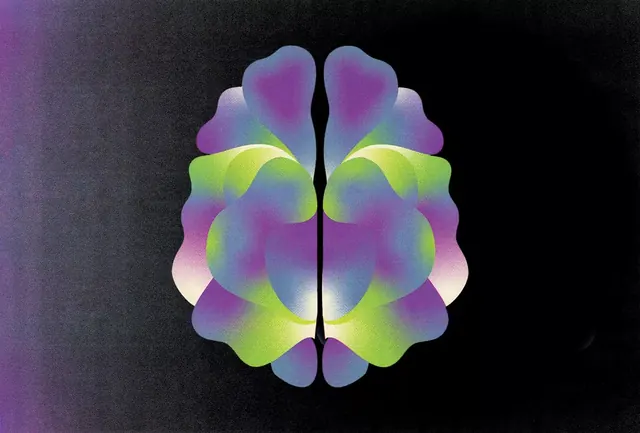
A bilaterally symmetrical abstract form with soft, rounded lobes filled with vibrant gradients across lime, magenta, cyan, and blue against a dark textured background.
Summary
A bilaterally symmetrical abstract form with soft, rounded lobes filled with vibrant gradients across lime, magenta, cyan, and blue against a dark textured background.
Visual description
A central organic shape dominates a dark, grainy background. The form is composed of overlapping, rounded lobes arranged with perfect bilateral symmetry around a vertical axis. The color treatment uses gradient mapping: each lobe transitions through multiple hues (lime green, magenta, cyan, purple, blue) with soft, feathered edges creating a luminous quality. The top lobes are predominantly cyan and magenta; the middle lobes shift to lime and purple; the bottom lobes return to magenta and cyan. Highlights of near-white appear where the gradients are brightest, adding depth and a bioluminescent glow. The dark background is textured with grain, providing contrast and making the bright form appear to float or emit light.
Key takeaway
The power of symmetry and color gradients to create visual harmony and depth. The gradient-mapping technique (color-to-color transitions) applied to organic shapes to suggest luminosity and movement. Using a dark, textured background to make a bright subject feel immersive and three-dimensional.
Reuse notes
Use as a reference for abstract digital illustration, particularly for biotech/AI-adjacent visuals or conceptual artwork. The gradient-mapping approach is useful for motion graphics, UI backgrounds, or posters where color sophistication is desired. The bioluminescent aesthetic works well for technology, science, wellness, or premium luxury contexts.
More like this



Keep what you find
A free account saves references to boards and can send you a weekly email of picks based on what you save.
To see every result, go Pro.