Preview image. Unlock full-res
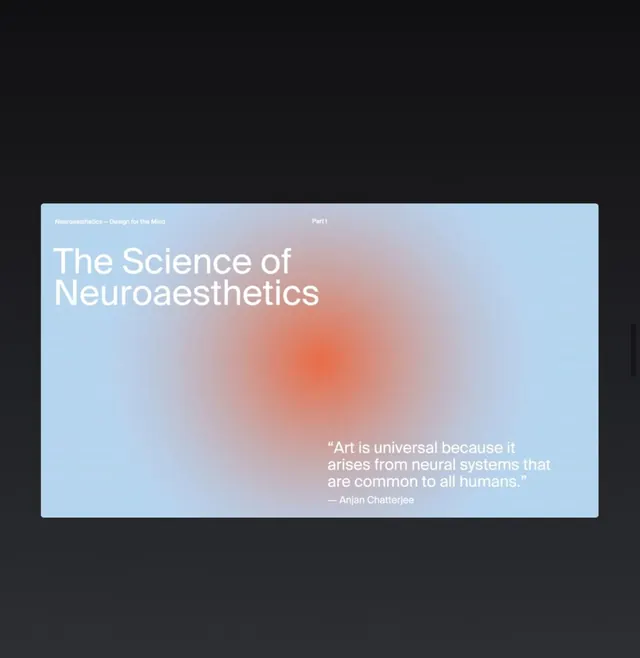
An academic presentation cover featuring a soft bicolor gradient (blue to peachy-salmon) with large sans-serif headline and inspirational quote on design and neuroscience.
Summary
An academic presentation slide introducing a neuroaesthetics topic with a soft gradient background transitioning from pale blue to warm peach, large headline, and an Anjan Chatterjee quotation on art and neuroscience.
Visual description
A presentation cover slide with a centered, minimalist layout dominated by a smooth bicolor gradient flowing diagonally from soft blue-gray in the upper left to warm peachy-salmon in the lower right. The upper-left corner displays a small header in muted gray: "Neuroaesthetics: Design for the Mind, Part I". The dominant element is the white sans-serif headline "The Science of Neuroaesthetics" positioned in the upper-center area in a large, bold weight with generous letter spacing. Below, in the lower-right quadrant, sits a quotation in slightly smaller white sans-serif: "Art is universal because it arises from neural systems that are common to all humans." attributed to Anjan Chatterjee in smaller caps. No imagery, borders, or decorative elements break the composition; the gradient itself provides all visual interest and color theory. The typography is clean and modern, trusting whitespace for legibility and elegance.
Key takeaway
Soft bicolor gradients as mood-setting backgrounds for educational presentations; diagonal color blending to suggest movement without animation; generous margins and vertical hierarchy for slide readability; using a single relevant quotation as a secondary header; typography-focused composition for technical or theoretical subjects.
Reuse notes
Excellent template for academic presentations, conference talks, educational webinars, and thought-leadership deck openings. The color blend (cool-to-warm) conveys both intellectual rigor and human warmth, fitting for design, science, psychology, and philosophy talks. Reuse the gradient technique for other Part-I introduction slides; adjust the quote and headline while keeping the layout. Works well in 16:9 or 4:3 widescreen formats. Pairs naturally with data-dense slides that follow, providing visual breathing room.
More like this


Keep what you find
A free account saves references to boards and can send you a weekly email of picks based on what you save.
To see every result, go Pro.