Preview image. Unlock full-res
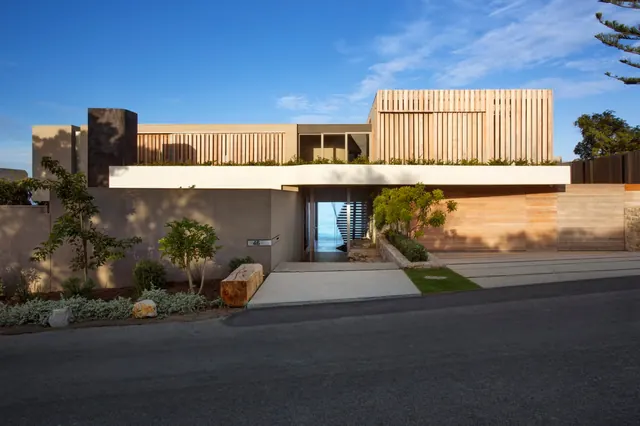
A contemporary beach house exterior featuring a split-level design with warm stone and timber cladding on the lower level and corrugated metal panels above, overlooking ocean views.
Summary
A contemporary beach house with a split-facade design: warm timber and stone on the ground level, vertical corrugated metal panels above, overlooking the ocean with minimal landscaping.
Visual description
Architectural photograph of a modern two-story residential structure set against a clear blue sky. The lower level features a warm sand-beige stone facade with timber cladding on the right side, a recessed dark entry with ocean views visible through glass, and a discrete house number (46). A horizontal white fascia band separates the two levels. The upper level is clad entirely in light-colored vertical corrugated metal panels, creating a strong linear rhythm. A dark cylindrical chimney or structural element contrasts on the left. The entry includes a simple concrete forecourt, minimal landscaping with drought-resistant plants and natural boulders, and a wooden gate on the right. The composition is frontal and symmetrical. The warm earth tones of the lower level contrast beautifully with the cool corrugated metal above and the clear ocean-blue sky beyond.
Key takeaway
Material honesty and horizontal stratification in modern residential design. The clear division between warm, textured base materials and the refined metal upper level creates visual interest while the horizontal bands echo the ocean horizon. The minimal landscape respects the environment rather than dominating it.
Reuse notes
Strong reference for contemporary beach house design, material palettes combining warm and cool tones, or modern residential architecture. Works well for architecture publications, lifestyle editorials, or sustainable coastal design narratives. The corrugated metal and timber combination is valuable for showing industrial meets organic design. The color palette is useful for demonstrating how earthy and cool tones can coexist in architectural contexts.
More like this


Keep what you find
A free account saves references to boards and can send you a weekly email of picks based on what you save.
To see every result, go Pro.