Preview image. Unlock full-res
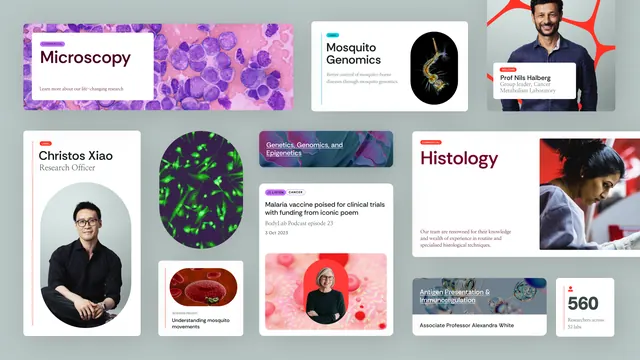
A modular 3x3 grid collage mixing lab imagery, researcher portraits, scientific visuals, and labeled topic cards to present a cohesive research program or organization.
Summary
A 3x3 portfolio grid showcasing research work through lab-stained cells, genomics logos, researcher headshots, microscopy visuals, and labeled topic cards in purple, pink, teal, and neutral tones.
Visual description
A structured 3x3 grid divides the canvas into nine equal cells, each containing a different visual asset. Top row: purple-stained cellular tissue with a "Microscopy" label card (white text on white/purple background), a "Mosquito Genomics" branded cell (geometric logo on black), and a headshot of a researcher with red graphic flourish. Middle and lower rows mix color-coded imagery (vibrant pink histology, bright teal fluorescent cells, red-tinted medical photography), researcher portraits in professional attire, a labeled information card, and a numeric data point. Typography is clean, bold sans-serif used sparingly on white label cards. The overall palette is sophisticated: scientific colors (purples, teals, pinks) against neutral grays and white, creating visual rhythm.
Key takeaway
Using a rigid grid to organize heterogeneous visual content (photos, cells, logos, text cards) into a unified whole. Color coding different research areas creates scannable organization without explicit categories. The restraint in typography and label size keeps focus on the imagery itself. Combining human portraits with scientific visuals humanizes research while maintaining formality.
Reuse notes
Excellent for research organizations, biotech companies, or academic departments needing to showcase capability across multiple verticals. The grid format scales to different cell counts (2x2, 4x4, responsive). The vibrant accent colors (pink, teal, purple) work best when linked to specific research themes or departments. Avoid for consumer-facing apps where the density might feel overwhelming; it's built for stakeholders and scientific audiences.
More like this






Keep what you find
A free account saves references to boards and can send you a weekly email of picks based on what you save.
To see every result, go Pro.