Preview image. Unlock full-res
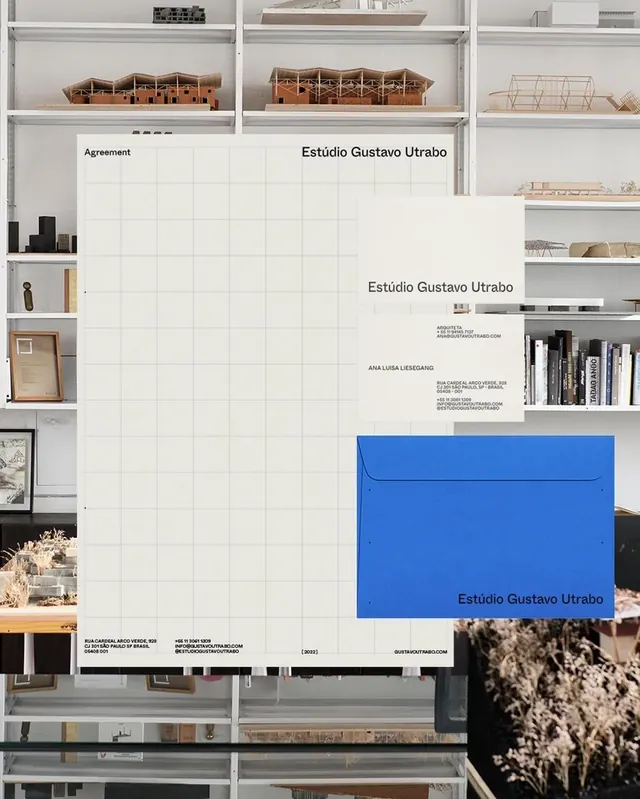
A comprehensive branding presentation for Estudio Gustavo Utrabo combining architectural models, printed collateral, and a blue envelope system on a grid-based poster.
Summary
A comprehensive branding presentation for Estudio Gustavo Utrabo combining architectural models, printed collateral, and a blue envelope system on a grid-based poster.
Visual description
A design-studio mood board mounted on shelving displays the identity system for Estudio Gustavo Utrabo. The upper shelves hold wooden and copper-colored architectural models of various scales and styles, organized by type. The lower half shows a white poster on gridded layout with the studio name in serif typography, a large blue envelope design occupying the lower right quadrant (the colored element breaks the otherwise monochromatic palette), and contact details in sans-serif at the bottom. To the left, shelves display additional artifacts: a black cityscape illustration, architectural drawings, books with color-coded spines, and found objects (dried grasses, textured samples). The overall composition marries the three-dimensional models with flat graphic systems, demonstrating cohesion across mediums. The palette is whites, grays, blacks, naturals, with the blue as a single chromatic accent.
Key takeaway
Using a single bright accent color (blue) to organize hierarchy and draw focus within an otherwise neutral palette. The integration of three-dimensional objects (models, samples) with flat graphics as a unified identity expression. A grid-based poster structure that accommodates both typography and generous white space while remaining organized.
Reuse notes
Strong reference for agency, architecture, or design-studio identities where sophistication comes from restraint. The approach works for luxury brands, consulting firms, or any context where the work speaks louder than the brand itself. The layered mood board itself is a documentation/presentation technique worth referencing.
More like this



Keep what you find
A free account saves references to boards and can send you a weekly email of picks based on what you save.
To see every result, go Pro.