Preview image. Unlock full-res
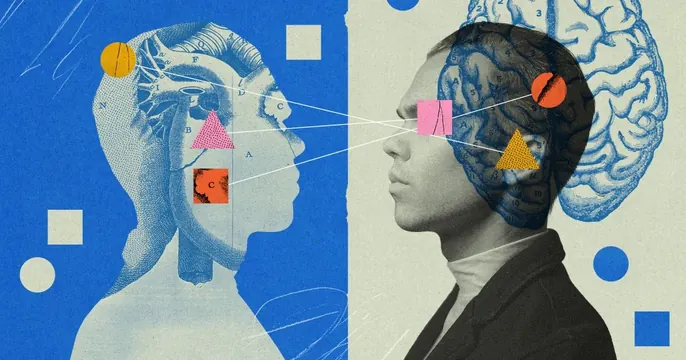
Diptych collage merging classical anatomical engraving with modernist portraiture and brain imagery, split across cobalt and cream grounds.
Summary
A diptych split between classical anatomical profile and modernist silhouette, each overlaid with colorful geometric shapes and brain imagery to explore the connection between form, cognition, and perception.
Visual description
Left panel: white-line engraved female profile against cobalt blue, overlaid with colorful geometric squares (coral, mustard, orange) connected by thin lines as anatomical markers; brain outline in pale blue beneath. Right panel: grayscale male profile on cream ground with bold blue brain illustration and coral/mustard geometric shapes overlaid. The two halves mirror each other's composition while maintaining distinct color palettes and visual approaches (traditional engraving vs. contemporary photomontage). Fine white connector lines and labels run across both panels as if conducting a visual dialogue about neural pathways and thought.
Key takeaway
The diptych as a teaching tool: opposing visual treatments (engraved vs. photographic) on a single scientific theme creates immediate cognitive contrast. The minimal geometric overlay (just three colored squares and connector lines) guides the eye without overwhelming; it reads as both decorative and instructional. The split-ground device (cobalt vs. cream) separates ideas while the linking lines unite them visually.
Reuse notes
Powerful framework for healthcare, psychology, or neuroscience communications where you need to show duality or two sides of the same phenomenon. Works as editorial illustration, poster, or learning material. The color restraint and mid-century aesthetic make it accessible to academic and commercial contexts alike. Requires high-quality anatomical source material to work at scale.
More like this


Keep what you find
A free account saves references to boards and can send you a weekly email of picks based on what you save.
To see every result, go Pro.