Preview image. Unlock full-res
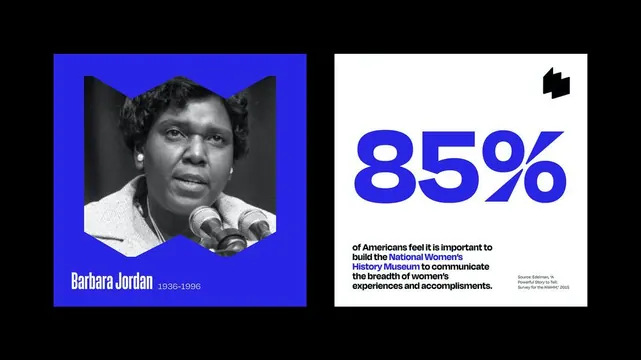
A two-column infographic pairing a portrait photo on a bold blue background with an oversized percentage stat on white, communicating cultural impact for a museum institution.
Summary
A split-screen infographic presenting a historical figure's portrait and biographical dates on a bold indigo background alongside an oversized statistic supporting a cultural institution's mission on white.
Visual description
Two equal-width columns: the left column has a deep, saturated electric-blue background (#2825E4) with a black-and-white portrait photo of a woman wearing a light-colored coat and speaking into two microphones, centered and given breathing room. Below the portrait in white sans-serif: "Barbara Jordan" and the years "1936-1996". The right column is white with a massive, bold, indigo "85%" aligned top-left, followed by small black text reading "of Americans feel it is important to build the National Women's History Museum to communicate the breadth of women's experiences and accomplishments." At bottom-right, a small attributions line in gray. A small black lightning-bolt icon sits top-right of the text block. The overall effect is gallery-wall formal: the portrait is treated as a hero image, the stat is the anchor, and the body copy grounds the message.
Key takeaway
The bold-color-on-one-side, white-on-the-other split immediately organizes information hierarchy. The oversized stat creates impact without needing a graphic; the photo alone carries the emotional weight. The high contrast (indigo, black, white) reads at any size and photographs well for social sharing.
Reuse notes
Effective for nonprofit and cultural-institution campaigns, museum marketing, diversity and inclusion reports, and educational institutional messaging. The portrait-plus-stat approach works well for spotlighting historical figures, client testimonials, or survey findings. The blue-white split can swap colors (photo on white, stat on color) depending on brand. Works especially well at square or portrait aspect ratios.
More like this


Keep what you find
A free account saves references to boards and can send you a weekly email of picks based on what you save.
To see every result, go Pro.