Preview image. Unlock full-res
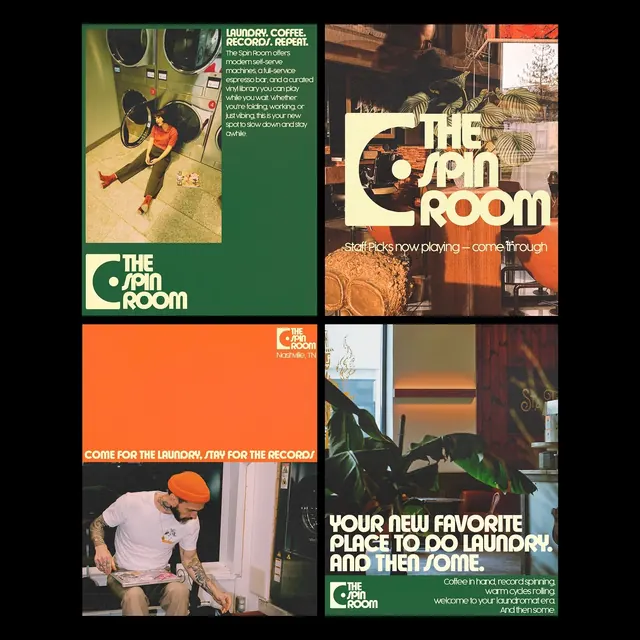
Retro record shop branding using earthy color blocks, bold typography, and textured photography arranged in an asymmetric grid layout.
Summary
A record shop and music venue identity system using an asymmetric grid of earthy color blocks, gritty interior photography, and cream sans-serif typography.
Visual description
A nine-panel brand grid on black background. Top left shows a photograph of a laundry room interior with washing machines and a person sitting on the floor; overlay text describes services. Top center-right is a full-bleed photograph of shelving and interior wood, with layered cream and orange text reading "THE SPIN ROOM" and event tagline. Center left is a large solid orange block with cream text announcing a laundry event; below right is a dark green block holding the branding lockup. Center panels show interior photography: a plant-framed window view, laundry equipment close-up, wooden surfaces. Bottom left repeats the orange block with event copy. Bottom right combines interior detail photography (wood paneling, baskets, plants) with a dark green band and white text saying "YOUR NEW FAVORITE PLACE TO DO LAUNDRY AND THEN SOME" and location copy. Typography is bold, all-caps, flush-left, using cream/white against dark green, orange, and black backgrounds.
Key takeaway
The asymmetric grid layout that treats color blocks as compositional weight rather than mere backgrounds, balancing photography and typography spatially. The limited, warm palette (deep green, burnt orange, cream, black) creating sophisticated atmosphere while remaining unconventional for a laundry service. The editorial sensibility treating mundane spaces (laundry room, interior details) as primary visual content rather than afterthought.
Reuse notes
Effective for service businesses, studios, and cultural venues that want premium positioning within a casual category. The color palette signals inclusivity and warmth without sacrifice of design seriousness. Pairs well with brand stories built on hospitality and community. The photography-first approach demands honest, textured spaces rather than sterile professional imagery.
More like this


Keep what you find
A free account saves references to boards and can send you a weekly email of picks based on what you save.
To see every result, go Pro.