Preview image. Unlock full-res
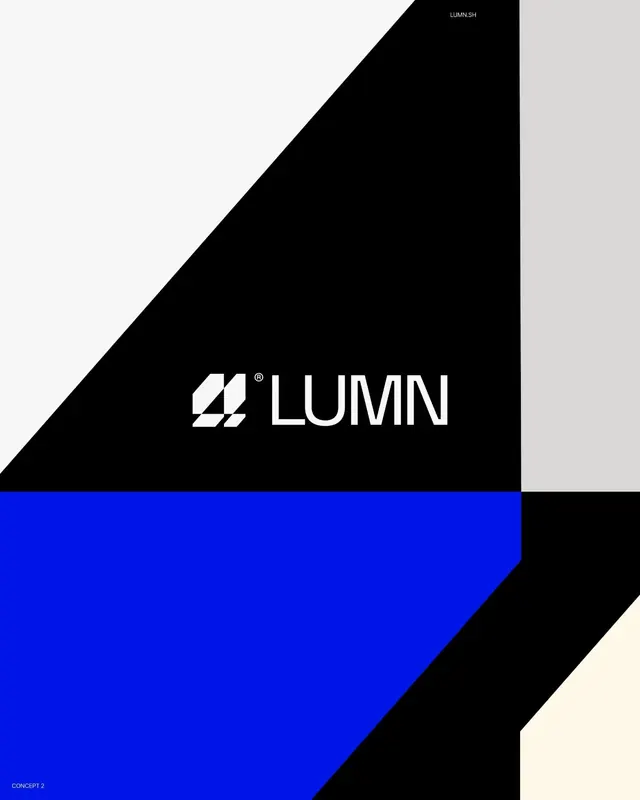
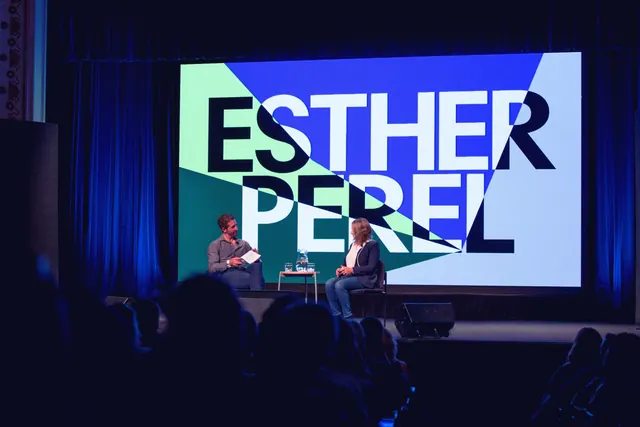
Large-scale stage display for PopTech conference using bold diagonal geometric color planes in deep blue and mint cyan, with chunky all-caps sans-serif type split across the composition.
Summary
Large-scale stage display for PopTech conference using bold diagonal geometric color planes in deep blue and mint cyan, with chunky all-caps sans-serif type split across the composition.
Visual description
A lit stage with a blue curtain backdrop and dark theatrical environment. Dominating the space is an oversized screen or scrim displaying the word "ESTHER PEREI" split across diagonal planes. The left-upper portion is a soft mint-green or cyan, the right-lower portion deep royal blue, with an angled diagonal line dividing them. The type is rendered in chunky, sans-serif all-caps, positioning the names across the color divide so one name sits on each plane. Below the screen, two people sit in conversation chairs on the dark stage floor, illuminated by stage lights, creating scale and context. The overall effect is contemporary, sharp, and commanding—suitable for a keynote or main event presentation.
Key takeaway
The diagonal split is a simple but powerful compositional device that organizes space and creates visual tension without complexity. Using the color division to literally split the typographic subject makes the geometry functional and memorable. The bold, legible sans-serif in all-caps ensures readability at distance and on camera. The deep blue/vibrant cyan pairing is striking but professional, avoiding both overly trendy pastels and corporate dullness.
Reuse notes
Excellent for tech conferences, corporate keynotes, or any presentation where the stage design itself should reinforce the brand identity. Works in person and on video/screen. The split composition naturally accommodates two names or topics. Needs sufficient lighting and contrast to land the color planes; may be harder to execute in low-light or small-scale contexts.