Preview image. Unlock full-res
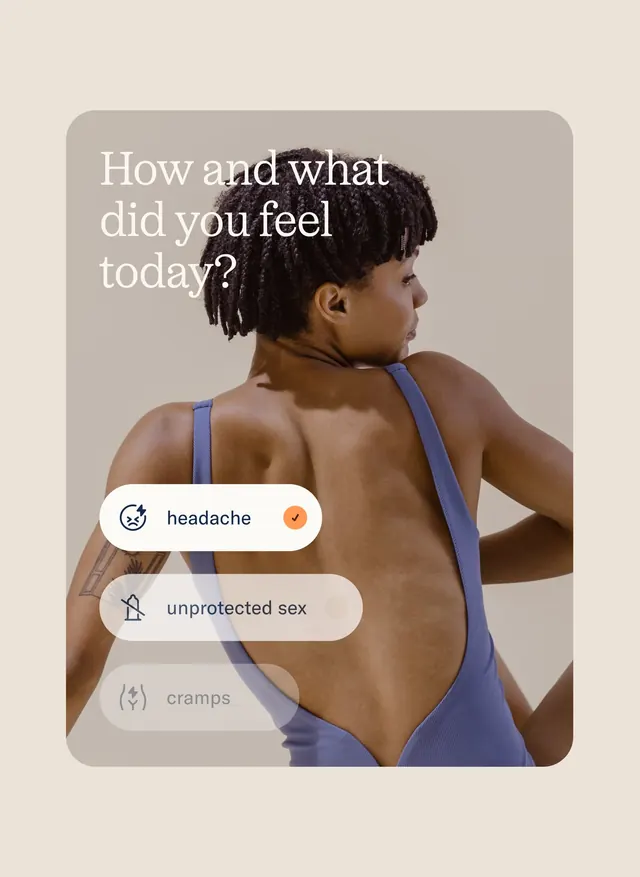
Mobile health app UI showing symptom-tracking controls layered over a portrait photograph of a person, using warm neutral tones and soft iconography.
Summary
Mobile health app showing a user's back in profile against a warm beige background with floating symptom-tracking cards ("headache", "unprotected sex", "cramps") and simple line icons overlaid.
Visual description
Portrait-orientation mobile frame with warm neutral background. Candid portrait photograph of a person from behind, shoulder-visible, wearing a blue strap, positioned right-center. Left side overlaid with rounded white pill-shaped cards stacked vertically, each pairing a simple line icon (sad face, wheat symbol, parentheses) with a symptom label in slate-blue sans-serif type. The topmost card ("headache") displays an orange checkmark. Typography is light-weight, all-caps hesitantly. No hard edges or bright colors; the color palette stays within warm beiges, deep browns, and a muted slate blue accent, creating an intimate, non-clinical tone despite the clinical subject matter.
Key takeaway
The overlay technique: UI elements float over photography without darkening or obscuring it, using carefully sized containers and generous negative space to avoid visual noise. The icon + label pairing is minimal but instantly legible. The warmth of the palette and the soft human imagery directly counter health-tech coldness, making sensitive reproductive topics approachable and destigmatized. Rounded corners on card containers soften the interface further.
Reuse notes
Strong pattern for telehealth, mental health, reproductive health, or any wellness app that requires vulnerability from the user. The portrait (cropped to back, not face) offers privacy while maintaining human connection. Works only when photography is warm, intimate, and non-clinical; sterile medical imagery would break the tone. Ideal when symptoms are sensitive or potentially stigmatized topics.
More like this



Keep what you find
A free account saves references to boards and can send you a weekly email of picks based on what you save.
To see every result, go Pro.