Preview image. Unlock full-res
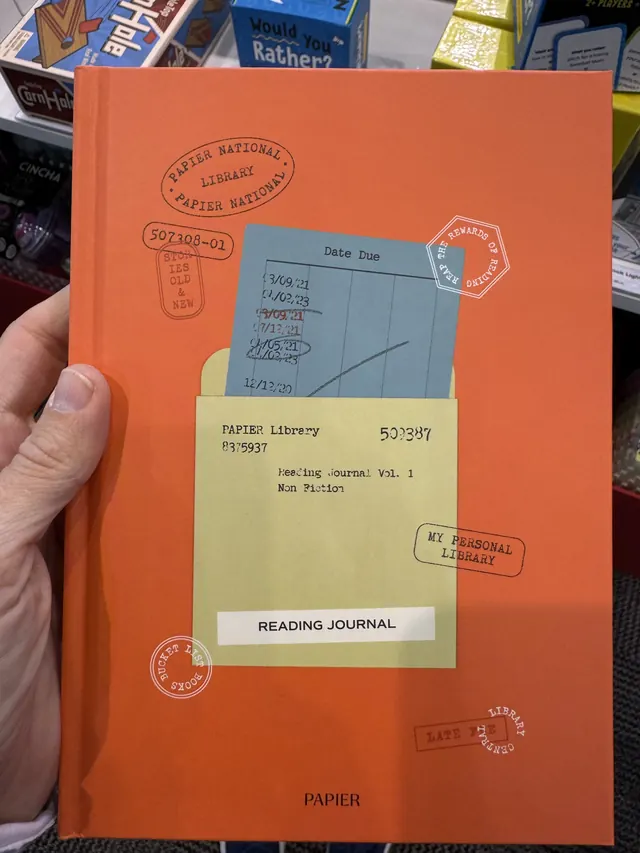
Book cover in burnt orange with layered library stamps, a date-due card, call number, and ownership labels creating a tactile, analog archive aesthetic.
Summary
Book cover in burnt orange with layered library stamps, a date-due card, call number, and ownership labels creating a tactile, analog archive aesthetic.
Visual description
A terracotta-orange (#CD6240) hardcover book shown in hand. The front cover is densely layered with institutional ephemera: oval library stamps (including "PAPIER NATIONAL LIBRARY" and "MY PERSONAL LIBRARY" in outlined type), a blue date-due card with handwritten dates arranged in a column, a pale yellow library label with monospace ID number "503347" and metadata ("PAPIER Library", "Keeping Journal Vol. 1", "Non Fiction"), and a white label reading "READING JOURNAL" in sans-serif. The stamps and labels are distributed across the burnt orange field creating a collaged, found-object feeling. The palette combines warm oranges and creams with cool gray-blue accents (the date card). The book spine shows "PAPIER" in simple typography.
Key takeaway
The layered-label approach communicates history and institutional authority without being dry. The specific details (handwritten dates, oval stamps, call numbers, spine printing) create believability and depth. The warm color paired with vintage label graphics reads as reliable and personal. This is about treating design elements as if they are physical artifacts, not just graphic shapes.
Reuse notes
Excellent for book covers, archival/library-themed designs, journaling products, stationery, and educational branding. Works particularly well for reading journals, personal tracking tools, and anything that benefits from the "found in the library" positioning. The terracotta palette is warm and inviting, suiting literary and wellness brands. The label layer technique is effective for vintage product packaging and specialty publishing. Less suited for digital-first or corporate contexts.
More like this

Keep what you find
A free account saves references to boards and can send you a weekly email of picks based on what you save.
To see every result, go Pro.