Preview image. Unlock full-res
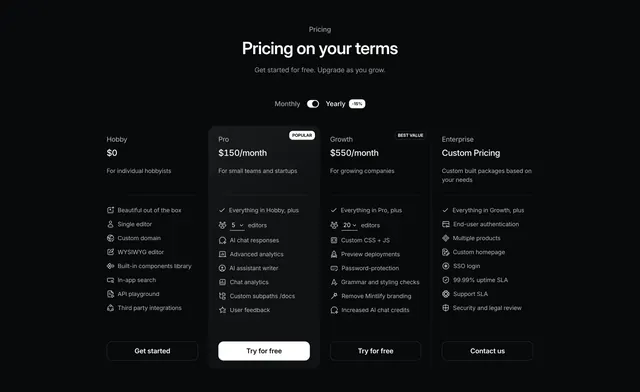
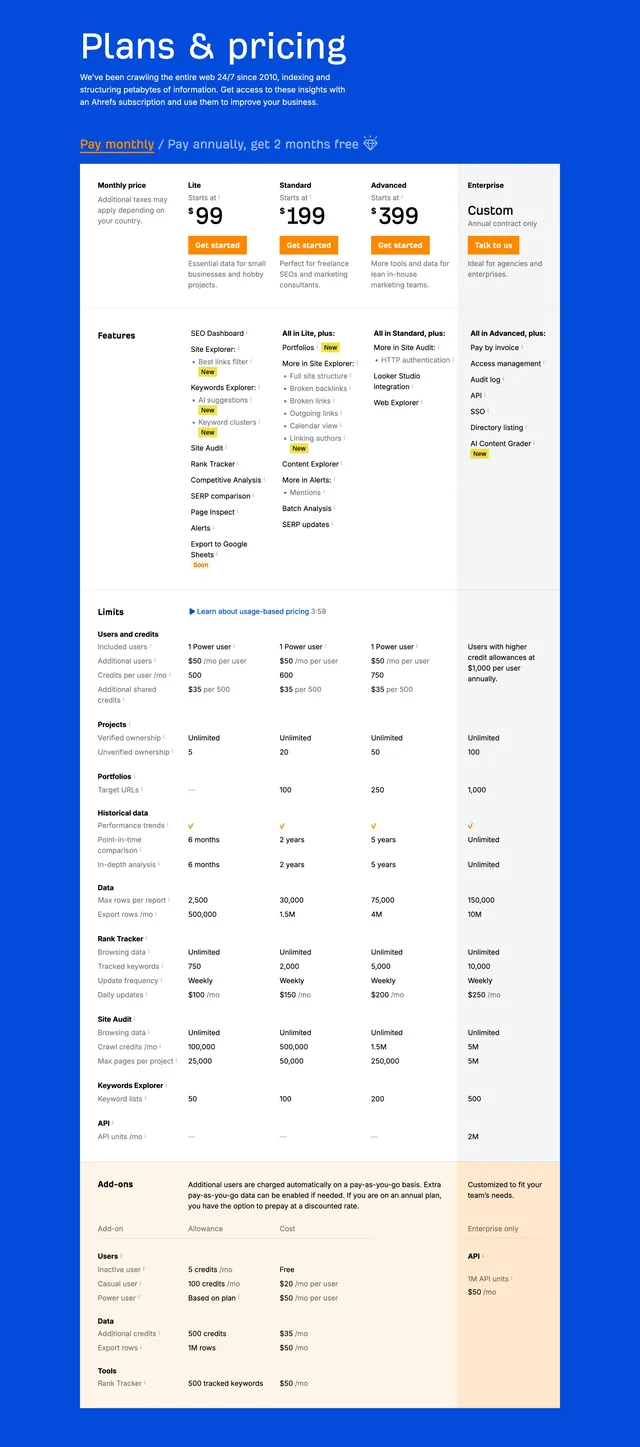
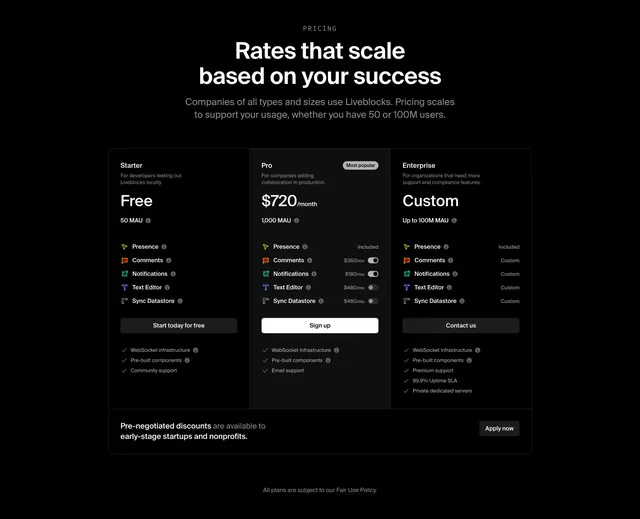
Centered four-column pricing table with highlighted Popular and Best Value tiers, checklist feature lists, and a node-based pricing pitch.
Summary
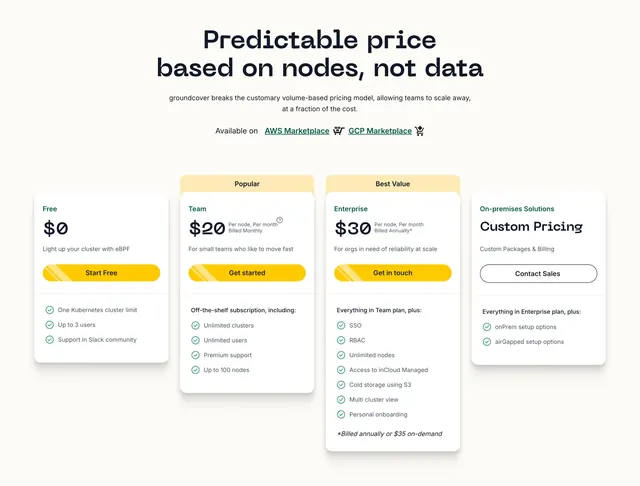
A centered four-tier pricing table (Free, Team, Enterprise, On-premises) where the two middle plans are lifted with yellow "Popular" and "Best Value" tabs and per-node prices. The defining move is anchoring the whole table on a node-based, not data-based, pricing claim.
Visual description
A two-line sans-serif headline "Predictable price based on nodes, not data" sits centered over a one-line subhead and an "Available on AWS Marketplace / GCP Marketplace" row with small cart icons. Below are four cards. Free and On-premises are plain white; Team and Enterprise sit slightly raised with rounded yellow header tabs reading "Popular" and "Best Value". Each card stacks a plan name, a large price ($0, $20, $30, or "Custom Pricing") with per-node billing notes, a one-line descriptor, a full-width CTA (yellow "Start Free", "Get started", "Get in touch", or outlined "Contact Sales"), and a green-check feature list, with later tiers labeled "Everything in [previous] plan, plus:". A small footnote on the Enterprise card notes annual versus on-demand pricing.
Key takeaway
The two-tab highlight ("Popular" and "Best Value") guides the eye to the intended tiers without changing card size much. Repeating "Everything in the previous plan, plus" keeps four dense columns scannable by showing only the deltas.
Reuse notes
A reliable four-tier SaaS pricing layout, especially where one axis (here, nodes) is the differentiator worth stating in the headline. Four columns get tight on smaller screens and will need to stack or scroll. Marketplace badges add procurement credibility for B2B buyers.