Preview image. Unlock full-res
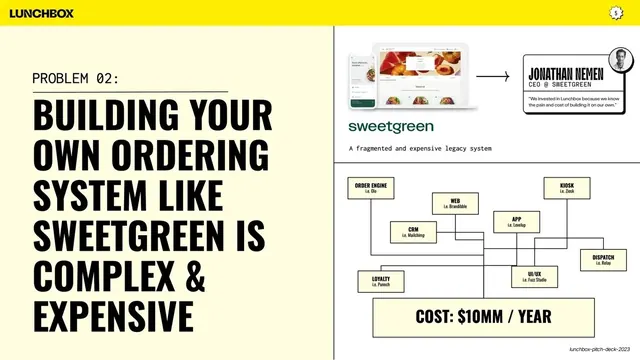
Cream split slide with a black all-caps problem headline left and a right side stacking a Sweetgreen testimonial above a tangled legacy-stack diagram ending in a cost box.
Summary
Problem 02: building your own ordering system like Sweetgreen is complex and expensive, shown on the right by a tangled tool-stack diagram that totals "$10MM / YEAR."
Visual description
Pale cream (#FBF6D9) left two-thirds, white right third with a thin dividing rule; yellow chrome bar, wordmark, "5" badge. Left side carries a monospace eyebrow "PROBLEM 02:" over a hairline rule, then a seven-line black condensed all-caps headline: "BUILDING YOUR OWN ORDERING SYSTEM LIKE SWEETGREEN IS COMPLEX & EXPENSIVE." The right side is split horizontally. The top shows a phone-and-tablet Sweetgreen UI mockup with an arrow pointing to a quote card: a circular CEO headshot, "JONATHAN NEMEN / CEO @ SWEETGREEN," and a pull quote about the pain and cost of building in-house, with the green "sweetgreen" wordmark and the caption "A fragmented and expensive legacy system." The bottom is a messy interconnected diagram of small labeled boxes (Order Engine i.e. Olo, Web, CRM, App, Kiosk, Loyalty, UI/UX, Dispatch) wired together with tangled lines, resolving into a large box reading "COST: $10MM / YEAR."
Key takeaway
Visualizing complexity as actual visual clutter, a deliberately tangled box-and-line diagram, then collapsing it into one blunt cost figure. Borrowing a competitor CEO's own quote to make the build-it-yourself argument is a high-credibility move.
Reuse notes
A reusable "build vs buy" problem slide for infrastructure or platform pitches. The tangled-stack-to-single-cost diagram works wherever you want to dramatize integration pain. Use real vendor names to make the stack legible. Mirror its sibling problem slide (same eyebrow and layout grammar) so the two read as a pair.
From this deck: Problem 02 build-your-own complexity
View deck
More like this




Keep what you find
A free account saves references to boards and can send you a weekly email of picks based on what you save.
To see every result, go Pro.