Preview image. Unlock full-res
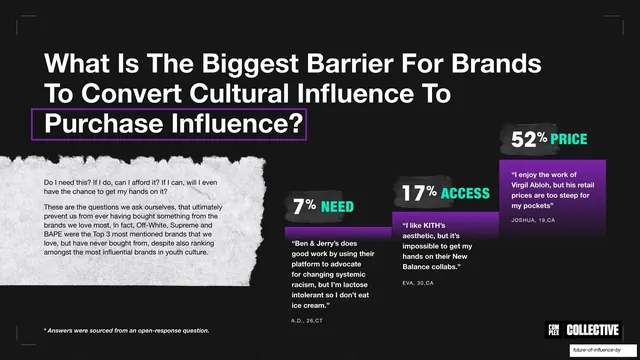
A barrier-ranking slide with a headline and analysis on a torn paper panel at left, and three ascending percentage callouts with respondent quotes stepping up the right.
Summary
A barrier-ranking slide: question and analysis sit on a torn paper panel at left, while three percentage callouts (Need, Access, Price) step diagonally up the right, each with an audience quote.
Visual description
Dark grainy field. The headline runs across the top in bold white, "What Is The Biggest Barrier For Brands To Convert Cultural Influence To Purchase Influence?", with the last line outlined by a thin purple rectangle. Lower-left: a torn white paper panel holds two paragraphs of black analysis copy. The right two-thirds carries three callouts arranged on an upward diagonal, each a large white percentage followed by a teal all-caps label and a short purple-tinted quote card: "7% NEED" (A.D., 26, CT), "17% ACCESS" (Eva, 30, CA), and the highest, "52% PRICE" (Joshua, 19, CA). A footnote bottom-left notes the open-response source. Complex / Collective lock-up bottom-right.
Key takeaway
Arranging the three ranked options on a rising staircase so the chart's shape itself communicates "price is the dominant barrier" before you read a number. Anchoring each percentage to a real respondent quote turns a stat into a reason.
Reuse notes
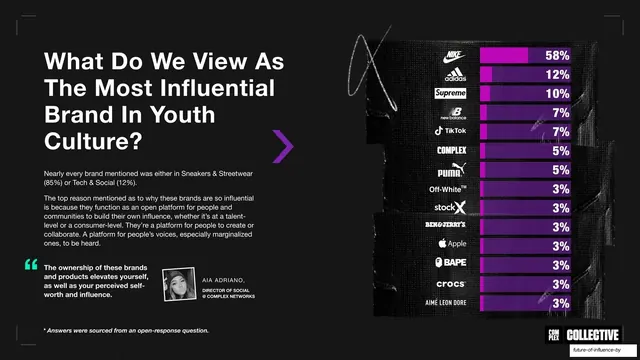
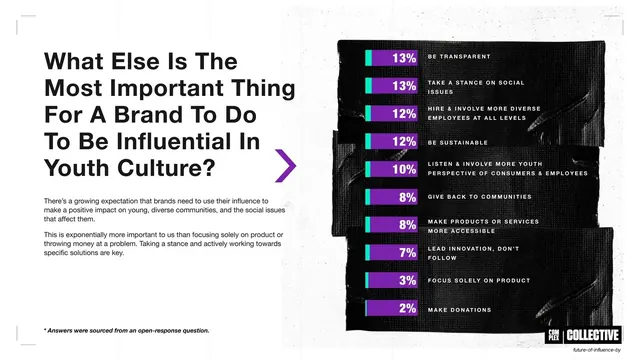
Best for a short ranking of three to four options where the relative size is the point. The diagonal staircase reads instantly but does not scale past a handful of items; for longer lists use the torn-tape bar chart instead. Keep quotes to one sentence so the callouts stay balanced.
From this deck: Biggest barrier to purchase influence ranked callouts
View deck




More like this


Keep what you find
A free account saves references to boards and can send you a weekly email of picks based on what you save.
To see every result, go Pro.