Preview image. Unlock full-res
A centered white card with a torn, photocopied edge on grey, headed HYPERCYCLE in pixel type and laid out as a mock dictionary entry.
Summary
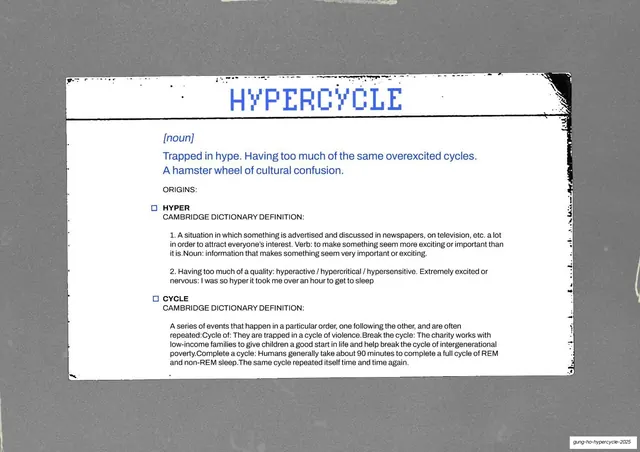
A definition page: a centered white card with a torn, toner-streaked right edge sits on a grey ground, headed "HYPERCYCLE" in blue pixel type and structured like a dictionary entry with [noun] gloss and HYPER / CYCLE origins.
Visual description
Full-bleed gritty grey ground (around #B8B8B2), 16:9. A large white card is centered on it; its right edge is ragged and smeared with black photocopy/toner distress, as if torn from a copier. At the top, "HYPERCYCLE" is set in a blocky blue pixel/bitmap face under a thin black rule. Below, a mock dictionary layout: "[noun]" in blue italic, a blue definition ("Trapped in hype. Having too much of the same overexcited cycles. A hamster wheel of cultural confusion."), then "ORIGINS:" and two checkbox-bulleted entries, "HYPER" and "CYCLE", each with a Cambridge Dictionary definition in black body copy. Footer slug bottom-right.
Key takeaway
Framing the report's coined term as a real dictionary entry on a torn photocopied card, which makes the neologism feel authoritative and a little punk at once. The blue headword and italic [noun] tag mimic lexicon styling while staying on-brand.
Reuse notes
A memorable way to define a key term, manifesto word, or piece of jargon inside a report or brand book. The torn/photocopy edge is the signature flourish; on a cleaner brand it can be dropped while keeping the dictionary structure. Best reserved for one or two hero definitions, not every term.
From this deck: Hypercycle dictionary definition card
View deck