Preview image. Unlock full-res
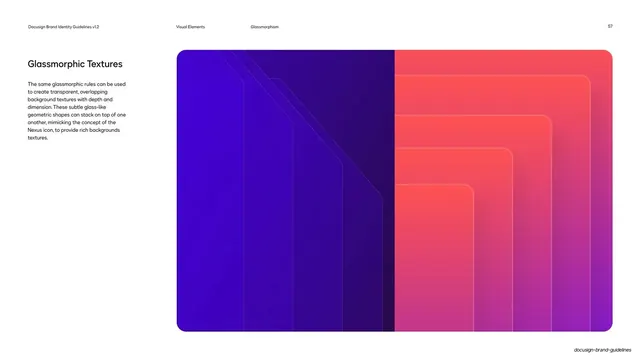
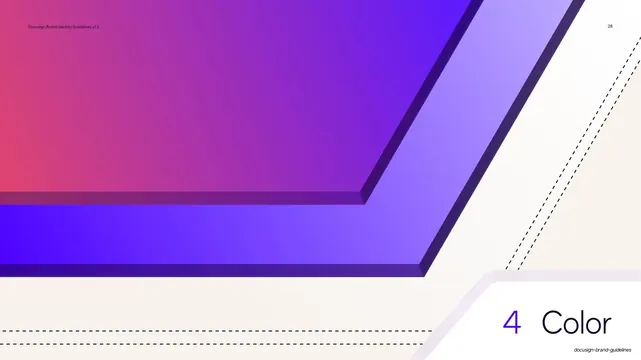
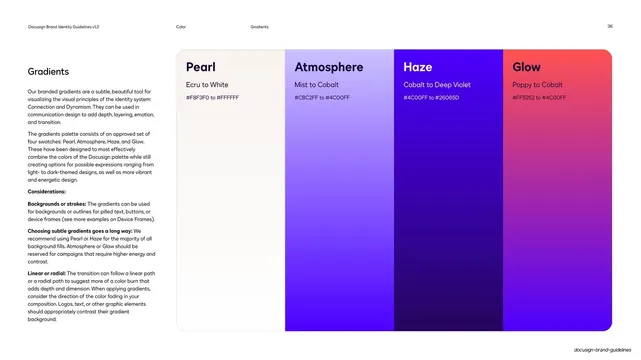
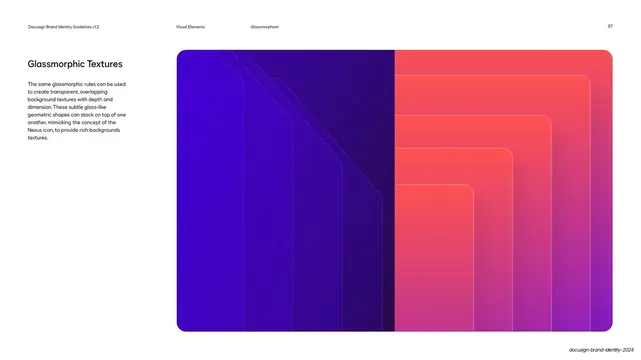
Guideline page showing stacked translucent rounded panels over a split cobalt-to-poppy gradient, forming a layered glassmorphic background texture.
Summary
A guideline page showing the glassmorphic rules applied to transparent overlapping panels that stack into a rich, dimensional background texture.
Visual description
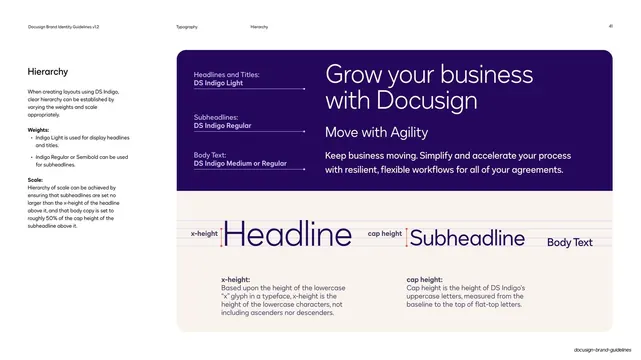
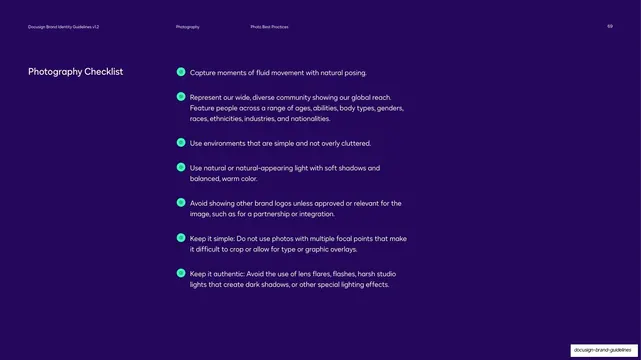
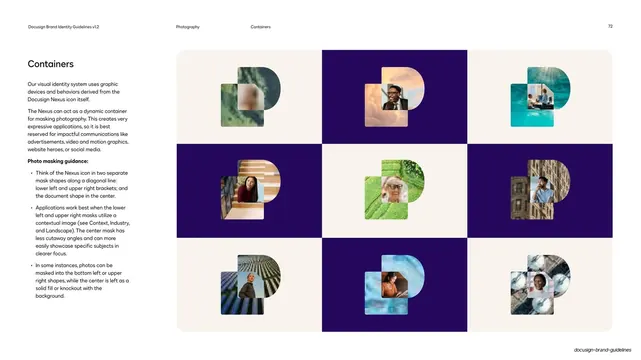
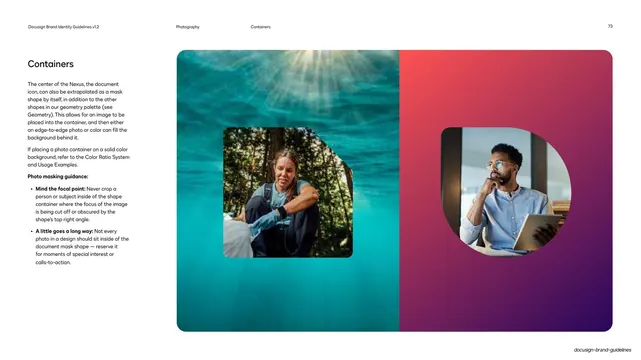
White page, running header (page 57, "Visual Elements / Glassmorphism"). The left column carries only the "Glassmorphic Textures" heading and a short paragraph; there is no bullet list. The right two-thirds is a single large full-bleed image: a vivid gradient field split between deep cobalt-violet on the left and poppy-red shading into magenta and violet on the right. Layered over it, translucent rounded-corner rectangles of varying sizes stack and overlap, each frosted panel tinting the gradient beneath and catching faint edge highlights, creating receding depth from front to back.
Key takeaway
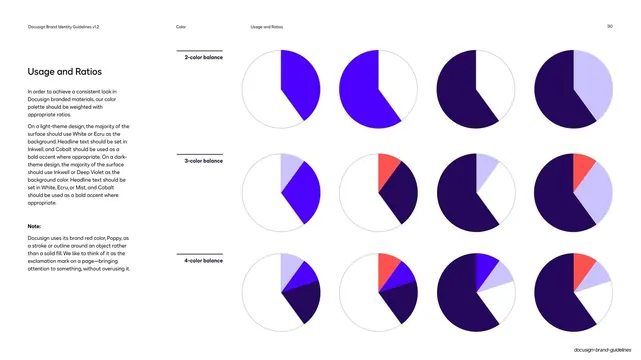
Generating a luxurious background from nothing but a two-color gradient and a few stacked translucent panels. The overlap of frosted layers reads as glass and depth with zero imagery, an easy, scalable texture.
Reuse notes
A flexible background for covers, section openers, and social where you need richness without photography or illustration. Works only on saturated gradient grounds; the glass layering is invisible on flat color. Keep panel count low so the stack stays legible.
From this deck: Docusign glassmorphic gradient textures
View deck
































More like this







Keep what you find
A free account saves references to boards and can send you a weekly email of picks based on what you save.
To see every result, go Pro.