Preview image. Unlock full-res
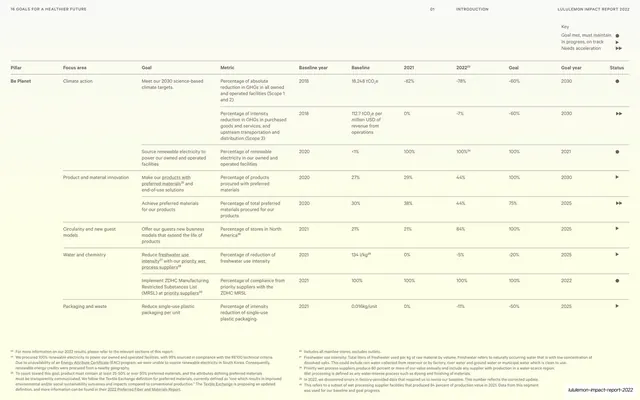
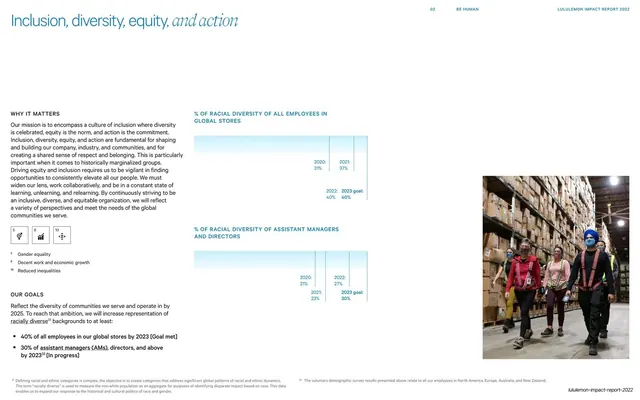
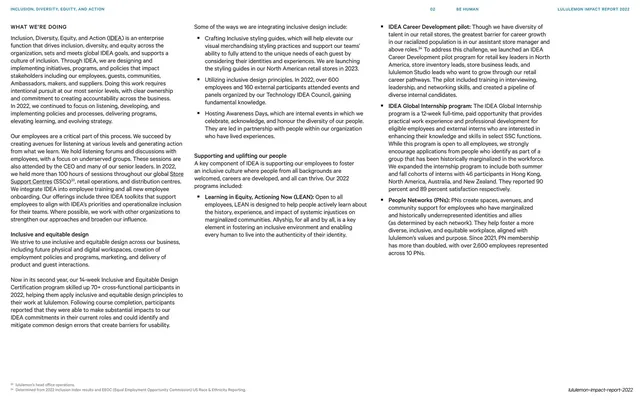
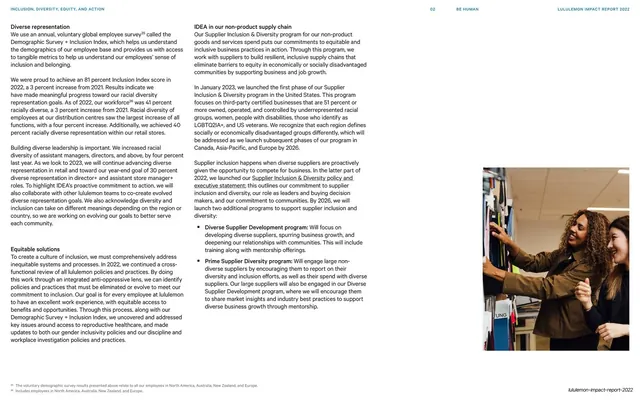
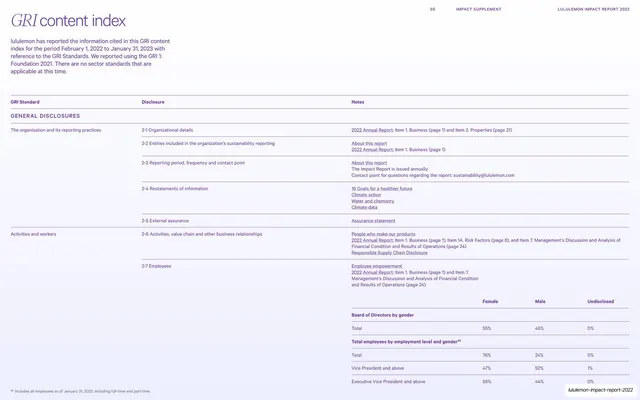
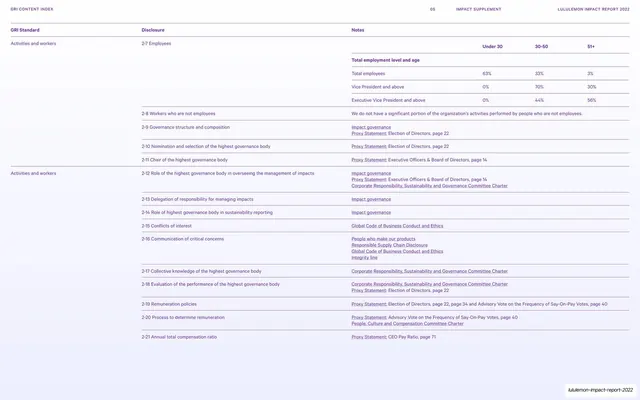
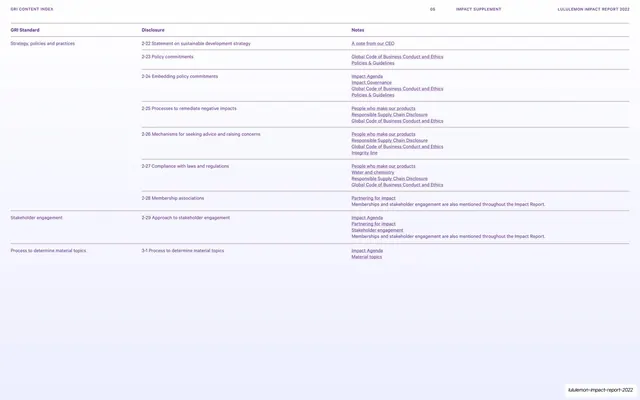
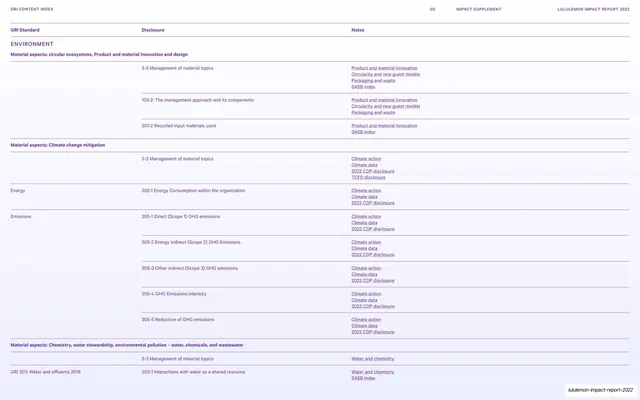
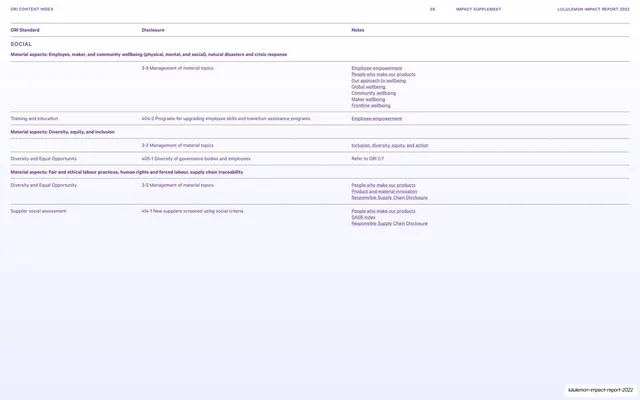
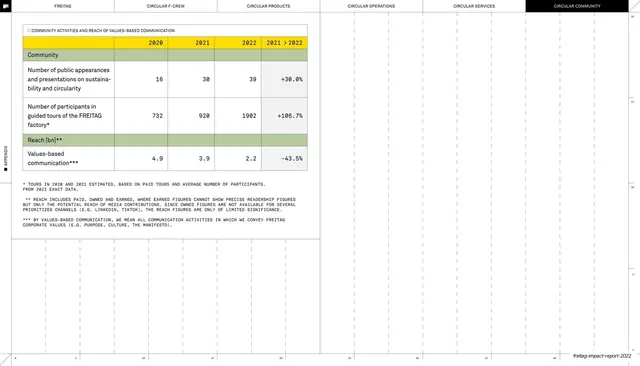
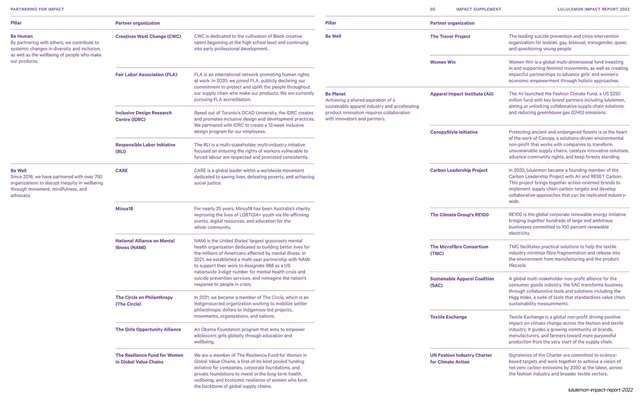
A partner directory laid out as a two-column table, each row pairing a named partner organization with a paragraph describing its work.
Summary
A partner directory page: a wide two-column table where the left column lists named partner organizations grouped under impact pillars and the right column gives a paragraph on each one's work.
Visual description
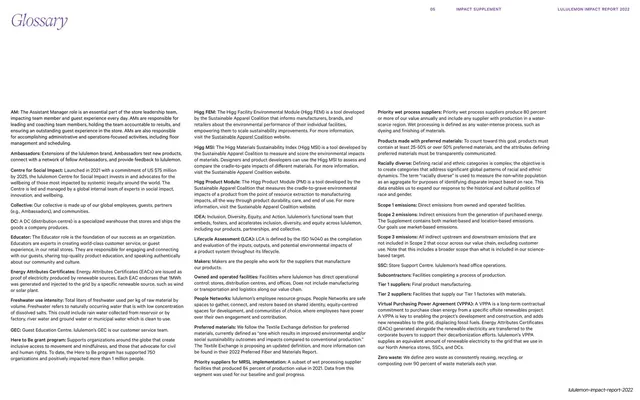
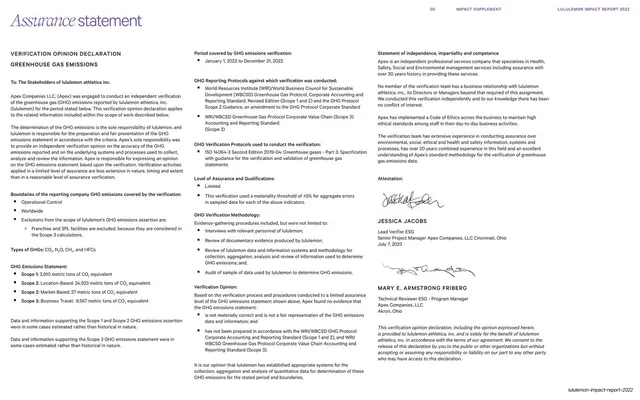
A light page. Headed by a "Pillar / Partner organization" column structure on a thin green rule, the lower two-thirds is a long table. The left "Pillar" column names organizations in bold (with sub-rows like Be Human, Be Well, Be Planet themes) and the right "Partner organization" column carries a descriptive paragraph for each, with green inline links. Rows are divided by hairline rules; entries such as creative-talent, design-research, illness-support and similar partner descriptions run down the page. The standard supplement running header (05, "IMPACT SUPPLEMENT", report title) tops the page; the slug wordmark sits bottom-right.
Key takeaway
Turning a partner or credits list into a clean two-column reference table, organization name on the left, what they do on the right, grouped under the report's own pillars so the directory reinforces the framework rather than reading as a flat list.
Reuse notes
A reusable pattern for any "our partners", "credits" or "acknowledgements" back-matter page. The name-left / description-right table scales to dozens of entries. Group rows by an existing taxonomy to give the directory structure and tie it back to the report's narrative.
From this deck: Partnering for impact, partner directory two-column table
View deck