Preview image. Unlock full-res
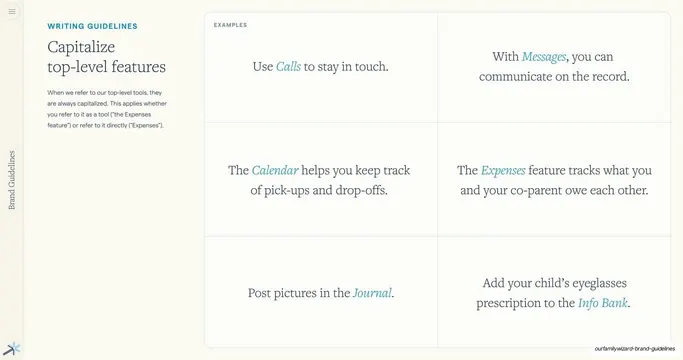
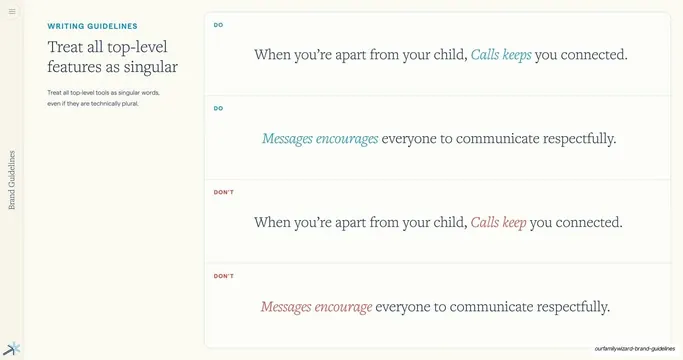
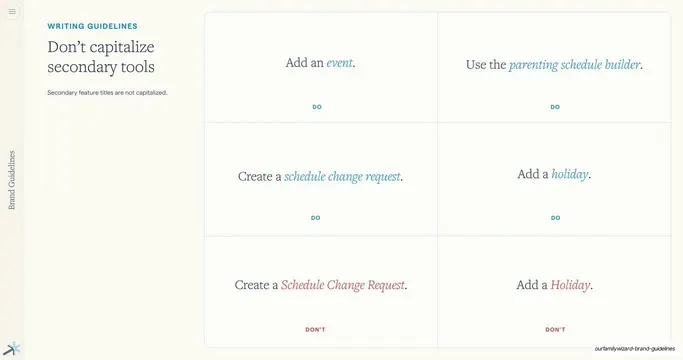
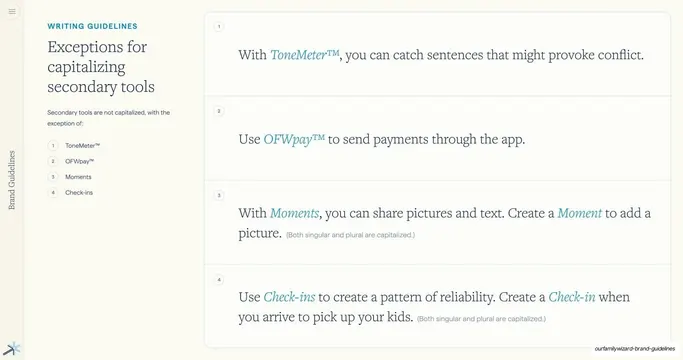
Capitalization-rule slide with guidance at left and a 2-by-3 grid of serif example sentences, each highlighting a capitalized feature name in italic teal.
Summary
A capitalization-rule slide: the rule on the left and a 2-by-3 grid of serif example sentences on the right, each demonstrating a capitalized top-level feature name set in italic teal.
Visual description
Cream background. The left column has a teal "WRITING GUIDELINES" eyebrow, a two-line navy serif heading ("Capitalize top-level features"), and a short gray sans paragraph. The right two-thirds is a bordered panel labeled "EXAMPLES" divided into a two-column, three-row grid of cells by hairline rules; each cell holds a centered navy serif sentence with the feature name in italic teal ("Use Calls to stay in touch," "The Calendar helps you keep track of pick-ups and drop-offs," "The Expenses feature tracks what you and your co-parent owe each other," "Post pictures in the Journal," "Add your child's eyeglasses prescription to the Info Bank"). The vertical "Brand Guidelines" label and blue Spark symbol sit at the left edge and bottom-left.
Key takeaway
A multi-cell example grid that repeats one rule across many real sentences builds confidence faster than a single example. Highlighting only the proper noun in italic teal keeps the rule visible while the sentences stay natural.
Reuse notes
A reusable "examples grid" pattern for any rule that benefits from repetition across varied contexts. The two-by-three grid balances density and breathing room; keep sentences short so each cell stays centered and uncramped.
From this deck: Capitalize features six-cell example grid
View deck























More like this





Keep what you find
A free account saves references to boards and can send you a weekly email of picks based on what you save.
To see every result, go Pro.