Preview image. Unlock full-res
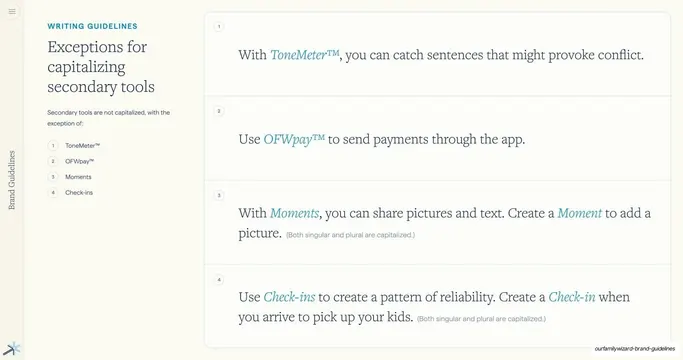
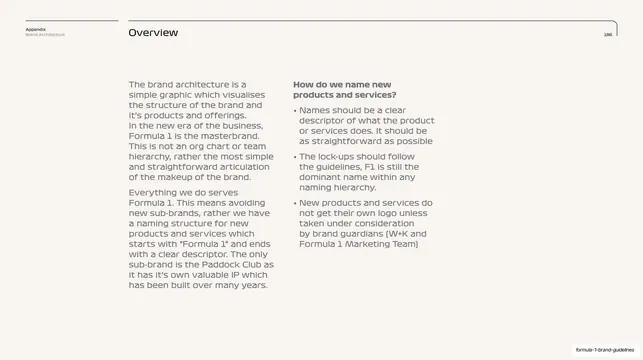
Exceptions slide with a numbered list of four trademark tools at left and four matching numbered example rows on the right, each setting the tool name in italic teal.
Summary
An exceptions slide: a numbered list of four trademarked secondary tools on the left, mirrored by four numbered example rows on the right, each showing the tool name in italic teal inside a real sentence.
Visual description
Cream background. The left column has a teal "WRITING GUIDELINES" eyebrow, a three-line navy serif heading ("Exceptions for capitalizing secondary tools"), a short gray sans lead-in, and a numbered list with small circular number markers (1 to 4: "ToneMeter," "OFWpay," "Moments," "Check-ins"). The right two-thirds is a tall bordered panel of four rows split by hairlines, each row prefixed by a matching small circled number and carrying a navy serif sentence with the tool name in italic teal ("With ToneMeter, you can catch sentences that might provoke conflict," "Use OFWpay to send payments through the app," and so on), some with a gray parenthetical note. The vertical "Brand Guidelines" label and blue Spark symbol sit at the left edge and bottom-left.
Key takeaway
Numbering both the left-hand list and the right-hand examples so the eye can pair item to demonstration is a tidy way to handle "here are the exceptions, here is each one in use." The circled-number markers tie the two columns together visually.
Reuse notes
A good pattern for exception lists, glossaries, or any "named items plus an example of each" slide. The numbered cross-reference scales to roughly four to six items before the right panel gets crowded.
From this deck: Exceptions for capitalizing secondary tools
View deck











More like this





Keep what you find
A free account saves references to boards and can send you a weekly email of picks based on what you save.
To see every result, go Pro.