Preview image. Unlock full-res
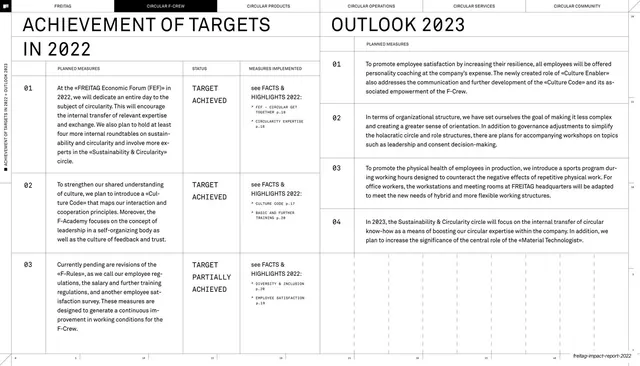
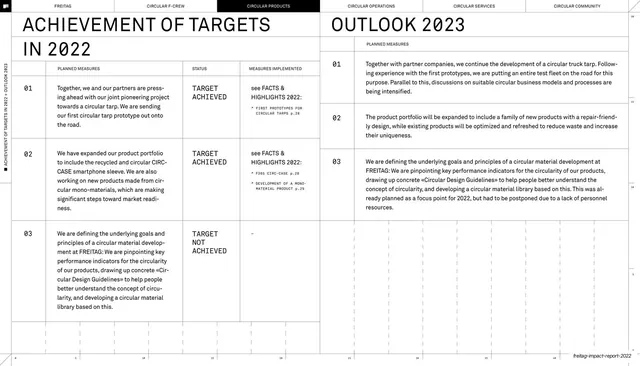
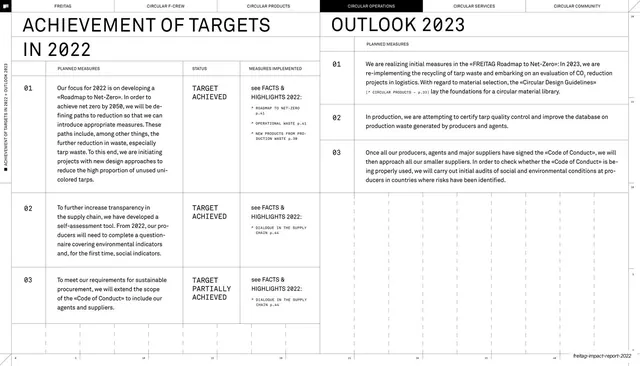
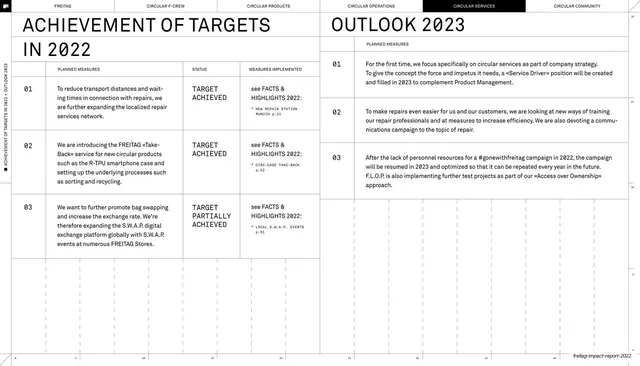
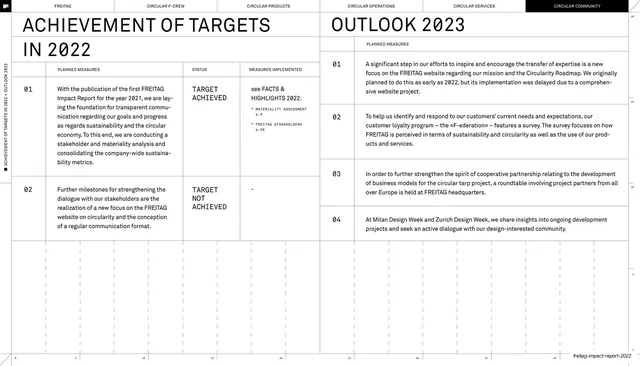
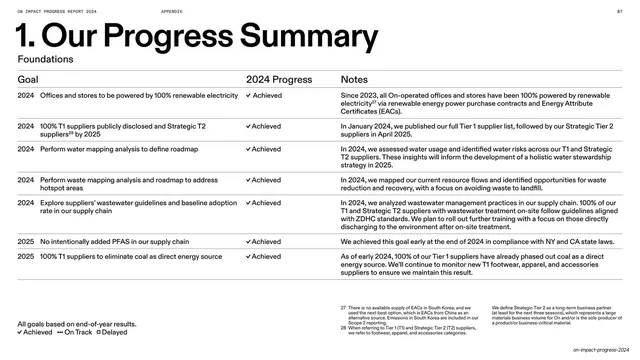
Two-panel results page with an oversized headline, a numbered targets-and-status table on the left and a numbered outlook list on the right.
Summary
A recurring scorecard page that closes a chapter: a huge serif "ACHIEVEMENT OF TARGETS IN 2022 / OUTLOOK 2023" headline spans the top, the left panel is a numbered table of planned measures with a status column, and the right panel is a numbered list of next-year outlook items.
Visual description
The six-tab header (CIRCULAR F-CREW active) sits on a hairline; the rotated left-margin label here reads "ACHIEVEMENT OF TARGETS IN 2022 + OUTLOOK 2023". The oversized all-caps serif headline runs the full width on two lines. Below, a vertical rule splits two panels. Left: a three-column table headed PLANNED MEASURES / STATUS / MEASURES IMPLEMENTED, rows numbered 01, 02, 03, with the status set in all-caps monospace ("TARGET ACHIEVED", "TARGET PARTIALLY ACHIEVED") and monospace page cross-references. Right: an outlook list numbered 01 to 04, each a short paragraph of serif body copy. Numbered ticks rule the bottom edge.
Key takeaway
The accountability layout: every prior commitment restated, given a plain-language status, and paired with the next year's plan side by side. Setting the status values in monospace all-caps turns them into quasi-labels and makes the scorecard scannable. The oversized headline keeps a dry table from feeling like fine print.
Reuse notes
A directly reusable pattern for the targets, KPIs, or commitments sections of any impact, ESG, or annual report, and for OKR or roadmap recaps in a corporate deck. The numbered measure-status-evidence table can be lifted wholesale. Keep status wording to a small controlled set so the column stays legible at a glance.
From this deck: Achievement of targets 2022 and outlook 2023 table
View deck








More like this


Keep what you find
A free account saves references to boards and can send you a weekly email of picks based on what you save.
To see every result, go Pro.