Preview image. Unlock full-res
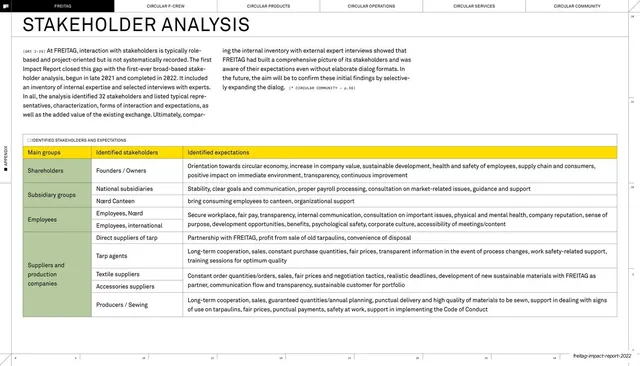
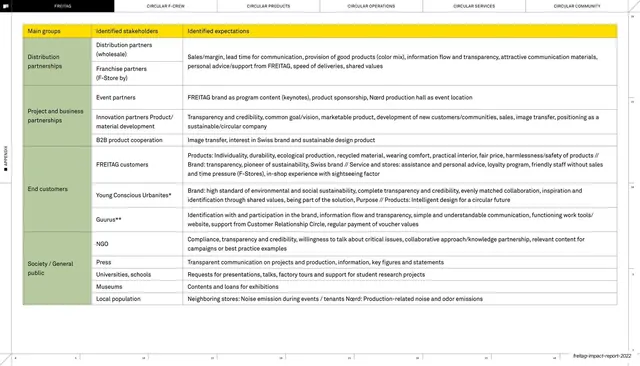
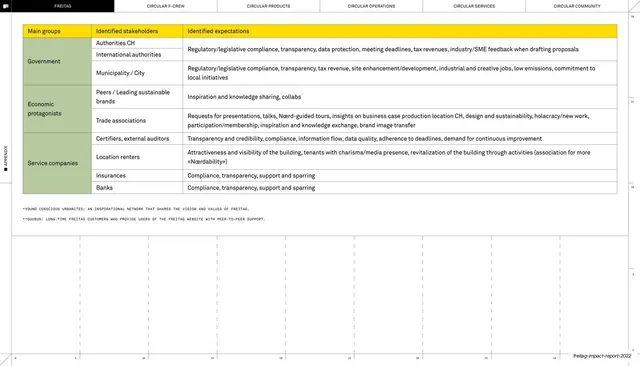
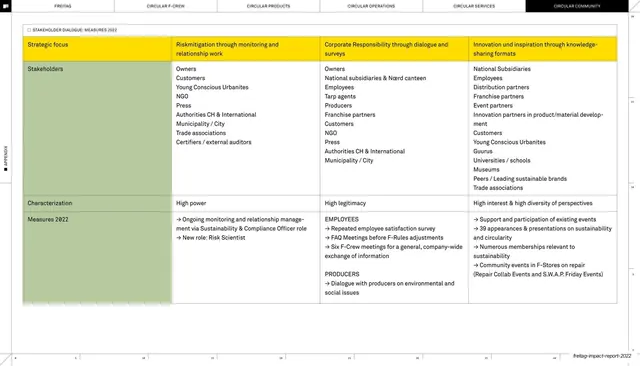
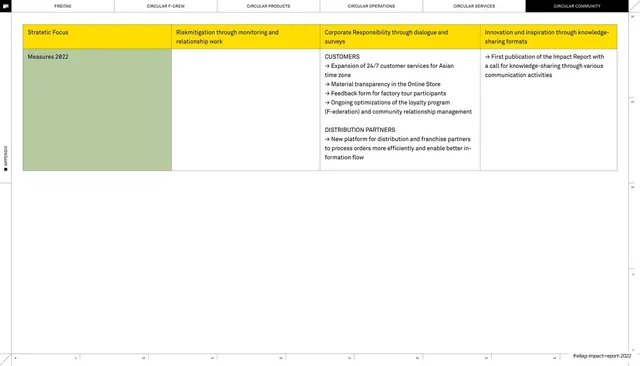
Appendix page combining an intro paragraph with a three-column stakeholder table that groups stakeholders and lists their expectations.
Summary
An appendix page that opens with an oversized headline and a short two-column intro, then drops into a three-column stakeholder table grouping stakeholders and listing each group's expectations. The grouped-row table is the centerpiece.
Visual description
White page, six-chapter top nav with "FREITAG" highlighted black. A large all-caps "STAKEHOLDER ANALYSIS" headline tops the page over two short columns of intro text with a monospace citation. Below, a wide three-column table titled "IDENTIFIED STAKEHOLDERS AND EXPECTATIONS" with a yellow header row reading Main groups / Identified stakeholders / Identified expectations. The left "Main groups" cells are filled light green and vertically span several rows each (Shareholders, Subsidiary groups, Employees, Suppliers and production companies); the middle column lists specific stakeholder types and the right column gives a sentence of expectations per row. Thin rules grid the cells, a vertical "APPENDIX" spine label runs up the left edge, and the running footer sits bottom right.
Key takeaway
The grouped-row table where a green merged left cell spans several detail rows, showing hierarchy inside a flat table without nesting. Heading the appendix with a billboard title keeps even a reference table feeling like a designed page.
Reuse notes
A reusable pattern for any grouped data: stakeholder maps, persona matrices, requirements by category. The merged green group cell is the key device; use it whenever many rows share a parent. The expectations column can hold a full sentence per row, so the table doubles as a readable summary, not just a grid.
From this deck: Stakeholder analysis table
View deck













More like this

Keep what you find
A free account saves references to boards and can send you a weekly email of picks based on what you save.
To see every result, go Pro.