Preview image. Unlock full-res
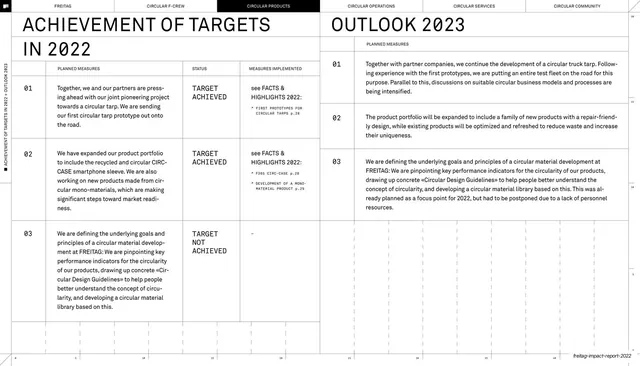
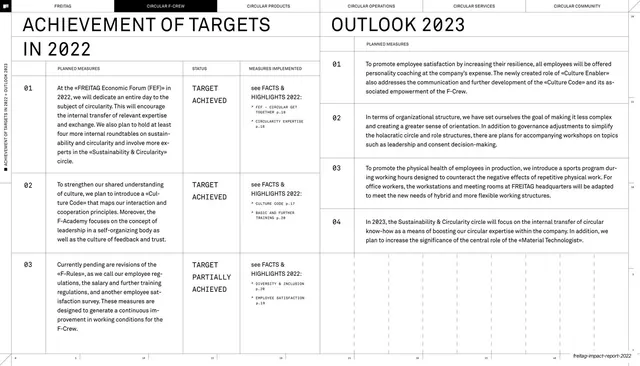
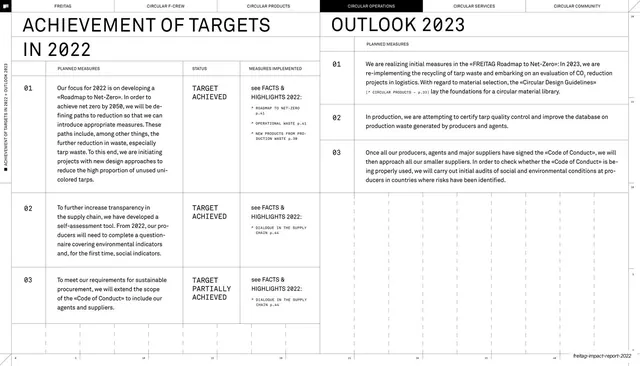
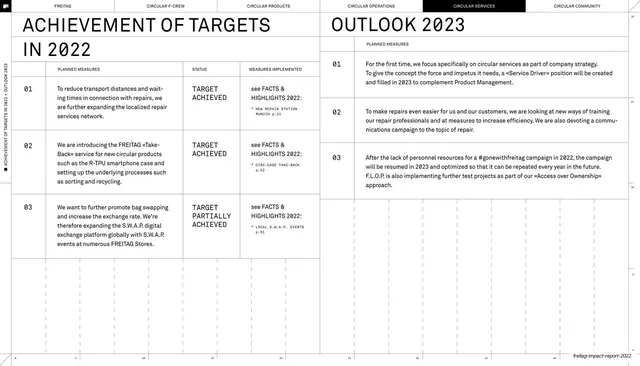
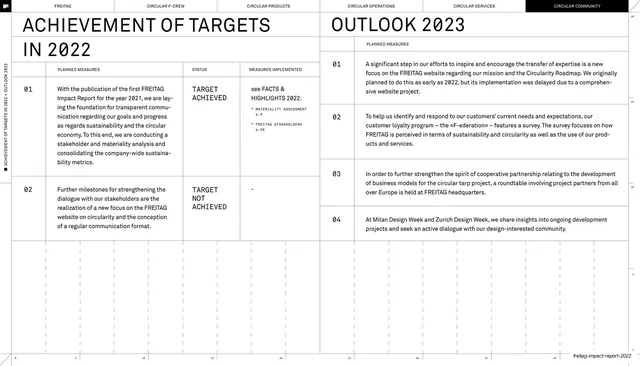
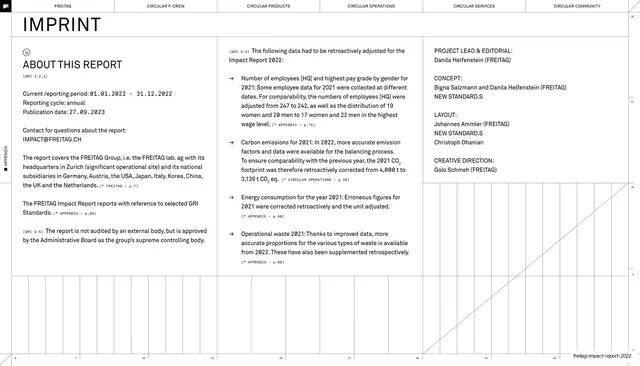
The chapter-closing scorecard repeated for Circular Products, with an oversized headline, a numbered targets-and-status table left and a numbered outlook list right.
Summary
The same accountability scorecard as the F-Crew chapter, now closing Circular Products: an oversized "ACHIEVEMENT OF TARGETS IN 2022 / OUTLOOK 2023" headline, a left table of three numbered measures with a status column, and a right list of three numbered outlook items.
Visual description
The six-tab header (CIRCULAR PRODUCTS active) sits on a hairline; the rotated margin label reads "ACHIEVEMENT OF TARGETS IN 2022 + OUTLOOK 2023". The oversized all-caps serif headline runs full width on two lines. A vertical rule splits the body. Left: a PLANNED MEASURES / STATUS / MEASURES IMPLEMENTED table, rows 01-03, with all-caps monospace statuses ("TARGET ACHIEVED", and notably "TARGET NOT ACHIEVED" with a dash in the evidence cell) and monospace page references. Right: an outlook list 01-03 of short serif paragraphs. Numbered ticks rule the base.
Key takeaway
The repeated, identical scorecard at each chapter end, including the honesty of a "TARGET NOT ACHIEVED" row left visibly unfulfilled, which builds credibility precisely because it is not airbrushed. Reusing the exact same template per chapter trains the reader and signals a rigorous, comparable reporting process.
Reuse notes
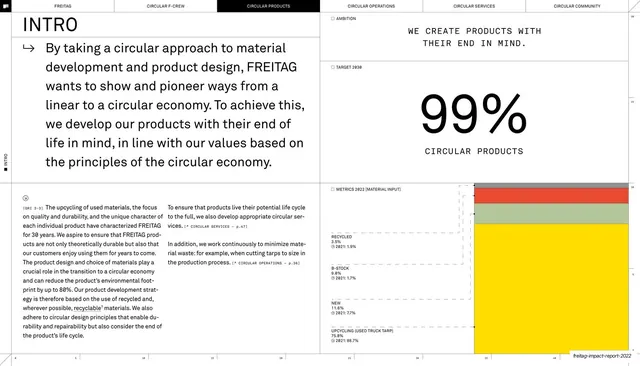
Use as the standard closing page for every section of an impact, ESG, or annual report, kept byte-for-byte consistent so chapters stay comparable. The willingness to show a missed target is the point; do not soften the status vocabulary. Pairs with each chapter's intro-stat page to bookend the section with ambition up front and accountability at the end.
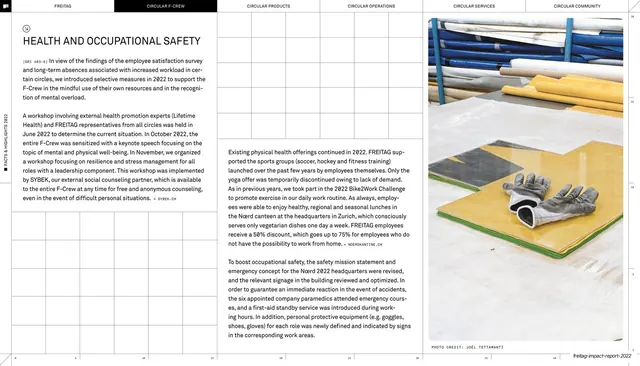
From this deck: Products targets 2022 and outlook 2023 scorecard
View deck



More like this


Keep what you find
A free account saves references to boards and can send you a weekly email of picks based on what you save.
To see every result, go Pro.