Preview image. Unlock full-res
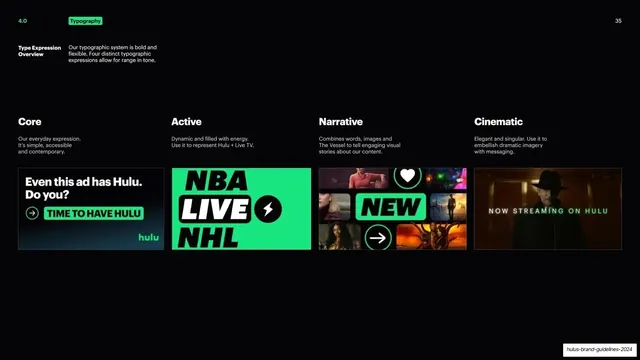
Black four-column overview of the Core, Active, Narrative and Cinematic type expressions, each with a heading, blurb and example.
Summary
The type-expression framework slide: four equal columns, Core, Active, Narrative and Cinematic, each with a name, one-line description and a representative example.
Visual description
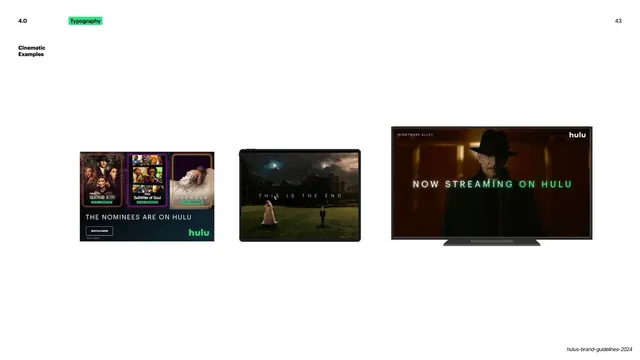
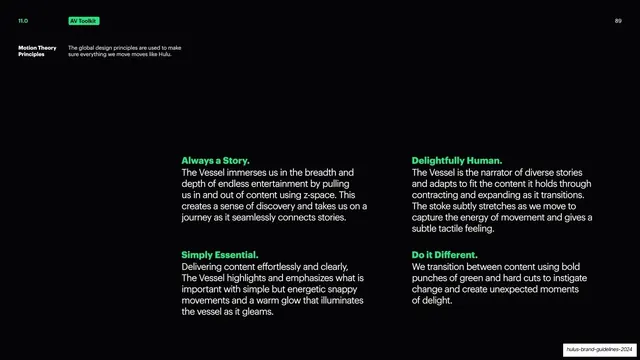
Near-black ground. Top-left: "4.0" number and green "Typography" pill; "35" top-right. A left label "Type Expression Overview" with a short intro about four distinct typographic expressions. Four evenly spaced columns each lead with a white bold heading and a gray blurb, then a wide example below: "Core" over a dark "Even this ad has Hulu. Do you?" banner with a green button; "Active" over a flat Hulu-green panel with chunky black "NBA / LIVE / NHL" type and a bolt badge; "Narrative" over a thumbnail collage with green "NEW" and arrow vessels; "Cinematic" over a moody dark film still reading "Now Streaming on Hulu." The four examples make each tone (functional, energetic, editorial, filmic) visible at a glance.
Key takeaway
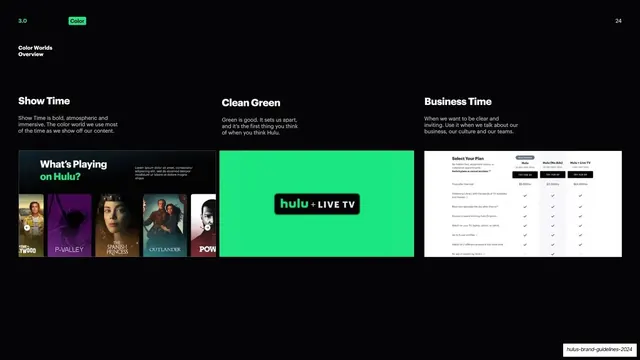
Splitting a typographic system into four named expressions and proving each with one real piece, mirroring the earlier color-worlds four-up. Repeating the grid pattern across color and type sections makes the whole deck feel systematic.
Reuse notes
Reuse to show a flexible type system that ranges in tone. The equal-column heading/blurb/example grid is directly reusable. Naming the expressions (Core, Active, Narrative, Cinematic) gives teams shorthand; back each with genuine sample creative.
From this deck: Hulu type expression overview
View deck





More like this



Keep what you find
A free account saves references to boards and can send you a weekly email of picks based on what you save.
To see every result, go Pro.